

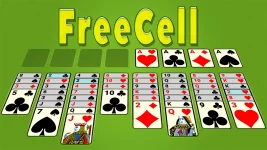
For people who enjoy orderly systems, visible information, and problems that reward patience, the freecell card game has a special appeal. It is not built around suspense or lucky draws. It is built around logic. Every card is in view from the start, which means the challenge is not guessing what comes next but figuring out what to do with what is already there. That design is a big reason FreeCell continues to attract analytical players.
Why do logical thinkers tend to prefer FreeCell over more luck-driven card games?
Logical thinkers often prefer FreeCell because the game exposes the full layout at the start and asks players to solve a visible system. Progress depends far more on sequencing, planning, and constraint management than on luck, which makes success feel earned through reasoning rather than random advantage.
Many card games mix skill and chance, but FreeCell shifts the balance heavily toward skill. Because nearly all of the information is visible from the beginning, players can study the board, identify dependencies, and build a plan. That creates a kind of satisfaction that analytical people often look for: the sense that the outcome reflects the quality of the decisions made along the way.
This also changes the emotional texture of play. A lucky game can be enjoyable, but it does not always feel intellectually satisfying. FreeCell usually does. If a player wins, the victory often comes from making the right move at the right time, not from waiting for the deck to cooperate. If a player loses, the reason is often traceable. A sequence was blocked. A free cell was used too early. A temporary move created a long-term problem.
That traceability matters. Logical thinkers tend to enjoy systems where cause and effect are easier to study. FreeCell gives them exactly that. The board becomes a puzzle in motion, and each decision leaves evidence.
How does FreeCell encourage the kind of reasoning that logical people value?
FreeCell encourages logical reasoning by forcing players to evaluate consequences, compare move sequences, and preserve flexibility under limited conditions. It rewards delayed gratification and careful analysis, which are core features of disciplined problem-solving in both games and real-world decision-making.
The game’s challenge is not simply to move cards into order. It is to manage constraints intelligently. Open columns and free cells are limited resources, and every move changes the landscape for future decisions. That means good players are constantly balancing immediate gains against later risks.
This is where the game becomes especially appealing to people with an analytical mindset. FreeCell rewards the habit of asking better questions. Instead of “What can I move now?” The stronger question is “What move leaves me with the best set of options later?” That is a logical frame, not a reactive one.
The game also discourages impulsiveness. Many obvious moves are not actually good moves. A card that can be moved does not always need to be moved right away. That tension between possibility and wisdom is part of what gives FreeCell depth. It trains attention toward structure rather than impulse.
That kind of focus has value beyond games. The American Psychological Association notes that even brief mental blocks from shifting between tasks can cost as much as 40% of productive time. A game like FreeCell pushes in the opposite direction by rewarding sustained attention to one coherent problem, which is one reason many players find it mentally settling rather than mentally noisy.
Can playing FreeCell support cognitive habits linked to sharper thinking?
FreeCell can support useful cognitive habits because it engages working memory, attention control, sequencing, and planning. It is not a medical treatment, but it does involve mental processes associated with clear thinking, and research on puzzle-based digital play suggests measurable links to stronger memory-related performance.
Claims about “brain games” should be kept realistic. FreeCell is not a cure for stress, poor sleep, or cognitive decline. Still, the game clearly relies on abilities that matter in everyday cognition. Players must hold multiple move paths in mind, remember where critical cards are buried, and resist tempting actions that may damage the board later.
That aligns with broader definitions of cognitive health. The National Institute on Aging defines cognitive health as the ability to think, learn, and remember clearly in order to carry out everyday activities effectively. FreeCell does not build that ability in isolation, but it does place repeated demands on several of its core components.
Research on puzzle-oriented game play helps explain why this matters. A 2023 study involving 181 older adults ages 60 to 81 found stronger working memory capacity and distraction resistance among puzzle gamers, with performance in some measures comparable to that of younger adults. That finding should not be overstated, but it does support the view that structured puzzle play can align with useful mental exercise.
Logical thinkers often appreciate games that reveal their own mistakes. FreeCell does that well. A poor decision has visible consequences, which makes reflection easier. Over time, players learn not just patterns of play but patterns of thought: pause earlier, preserve space longer, and avoid attractive moves that reduce flexibility.
Why does FreeCell feel mentally clean compared with more chaotic digital entertainment?
FreeCell feels mentally clean because it offers a bounded system with clear rules, full information, and a finite objective. Instead of overwhelming the player with endless novelty, it channels attention into one solvable problem, which can reduce mental clutter and create a stronger sense of order.
A lot of modern digital entertainment is designed around interruption. Notifications, autoplay, rapid scene changes, and algorithmic feeds all compete for attention. FreeCell does not. Its appeal is almost the opposite. It slows the player down and places value on observation, order, and restraint.
That makes the game especially attractive to people who already spend much of the day in fragmented environments. Work, study, and online communication often demand constant switching. FreeCell offers relief from that pattern by providing one problem at a time, one board at a time, and one endpoint.
There is also a practical reason that kind of focused activity matters. The CDC says adults need at least 7 hours of sleep each day, and adults who get less than that are considered to have insufficient sleep. In 2022, the share of U.S. adults getting less than 7 hours ranged from 30% in Vermont to 46% in Hawaii. When attention is already strained by poor sleep and constant task-switching, a structured game that rewards calm analysis can feel more restorative than passive scrolling or noisy digital habits.
FreeCell also offers closure. A game resolves. A board is either solved or not. That end point matters more than it may seem. It gives the brain a contained challenge rather than an endless stream of unfinished stimuli.
What ultimately makes FreeCell a lasting favorite among logical thinkers?
FreeCell remains a favorite among logical thinkers because it turns simple rules into deep decision-making. It respects the player’s intelligence, makes outcomes traceable, and rewards careful planning over speed or luck. That combination gives it lasting appeal for anyone who enjoys disciplined, visible problem-solving.
The lasting strength of FreeCell is that it stays honest. It does not pretend complexity through flashy design or artificial suspense. Its challenge comes from structure. Players see the problem, test a theory, revise a plan, and live with the consequences of their choices.
That is exactly what many logical thinkers want from a game. They want a system they can study. They want decisions that matter. They want outcomes that can be explained. FreeCell offers all three.
It also respects repetition. The more you play, the more clearly you see patterns in your own thinking. You learn when you rush, when you cling to a bad sequence, and when you fail to preserve space. In that sense, the game is not only a puzzle but a mirror. It shows how you reason under limits.
That is what makes it more than a passing diversion. For players who value logic, order, and deliberate thinking, FreeCell remains one of the clearest examples of how a simple game can still offer serious mental satisfaction.
