

Understanding the Role of a Bank Statement Converter
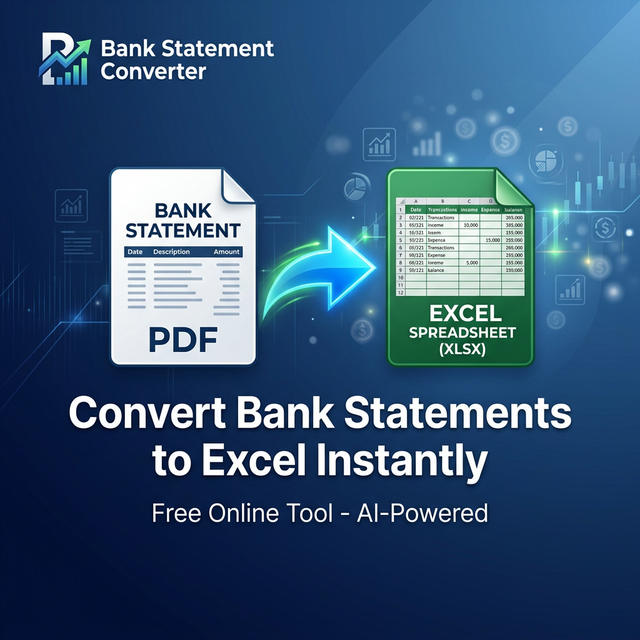
A bank statement converter is a powerful digital tool designed to transform bank statement files into structured and usable formats such as Excel, CSV, or PDF. In today’s fast-paced financial environment, individuals and businesses often receive bank statements in formats that are difficult to edit or analyze. This is where a converter becomes essential, enabling users to extract valuable financial data quickly and efficiently. By automating the conversion process, it eliminates the need for manual data entry, reducing both time and human error.
Moreover, bank statement converters are widely used across industries such as accounting, auditing, and financial analysis. They allow professionals to easily integrate transaction data into accounting software, making reconciliation and reporting far more accurate. Whether you are managing personal finances or running a business, these tools simplify complex financial data into accessible formats. As financial transactions grow in volume and complexity, the importance of having a reliable converter becomes even more significant for maintaining transparency and efficiency.
Key Features That Make Converters Essential
One of the most notable features of a bank statement converter is its ability to handle multiple file formats. Many banks provide statements in PDF format, which can be difficult to manipulate. A good converter can accurately extract data from these PDFs and convert it into spreadsheets without losing formatting or accuracy. Advanced tools also support scanned documents using OCR (Optical Character Recognition), ensuring even handwritten or image-based statements can be processed effectively.
Another essential feature is automation and customization. Users can define specific formats, categorize transactions, and even filter data based on their needs. This level of flexibility is particularly useful for businesses that require consistent reporting formats. Additionally, many converters offer secure data processing, ensuring sensitive financial information remains protected. With encryption and compliance with data protection standards, users can confidently convert their bank statements without risking privacy or security breaches.
Benefits for Businesses and Individuals
Bank statement converters offer numerous advantages for both individuals and organizations. For businesses, they significantly improve efficiency by automating repetitive tasks such as data entry and reconciliation. This allows employees to focus on more strategic activities like financial planning and analysis. Furthermore, accurate data conversion minimizes errors that could lead to financial discrepancies, ensuring compliance with accounting standards and regulations.
For individuals, these tools simplify personal finance management. Users can easily track spending patterns, categorize expenses, and prepare budgets. By converting bank statements into editable formats, they gain better control over their finances. Additionally, converters are particularly helpful during tax season, as they allow users to organize and analyze financial records quickly. Overall, the convenience and accuracy provided by these tools make them an invaluable asset in modern financial management.
Choosing the Right Bank Statement Converter
Selecting the right bank statement converter requires careful consideration of several factors. First, users should evaluate the tool’s accuracy and compatibility with different bank formats. Not all converters are created equal, and some may struggle with certain statement layouts. Reading reviews and testing demo versions can help determine the reliability of a tool before making a commitment.
Another important factor is ease of use and customer support. A user-friendly interface ensures that even individuals with limited technical knowledge can operate the software effectively. Additionally, having access to responsive customer support can make a significant difference when encountering issues. Pricing is also a consideration, as some converters offer subscription-based models while others provide one-time purchases. Balancing cost with features and reliability is key to finding the best solution for your needs.
Future Trends in Bank Statement Conversion Technology
The future of bank statement converters is closely tied to advancements in artificial intelligence and automation. Modern tools are increasingly incorporating AI to improve data extraction accuracy and recognize complex transaction patterns. This means converters will become even more efficient, capable of handling diverse formats with minimal user intervention. As technology evolves, we can expect faster processing speeds and enhanced capabilities that further simplify financial data management.
Additionally, integration with cloud-based platforms is becoming more common. This allows users to access their converted data from anywhere and collaborate with team members in real time. Security will also continue to be a major focus, with developers implementing stronger encryption and compliance measures. As financial systems become more digital, bank statement converters will play a crucial role in bridging the gap between raw data and actionable insights, making them indispensable tools for the future.
