

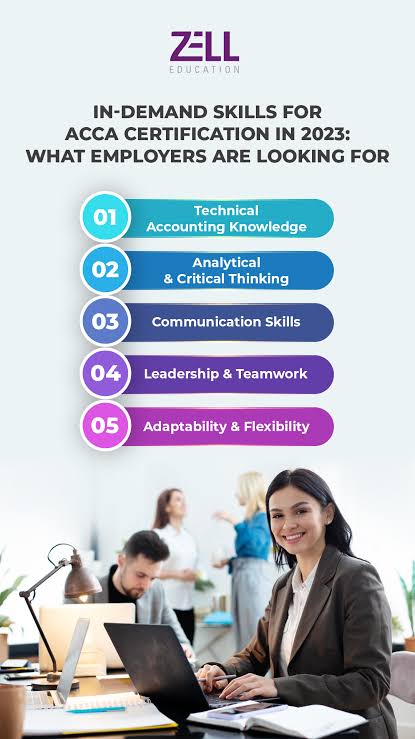
AI tools have taken over a big chunk of routine finance work. Reconciliations, basic reporting, invoice processing, a lot of that is automated now. So when a company posts a finance role in 2026, they are not looking for someone to do the work a software already handles. They want someone who can sit with the output, question it, and make a call.
That is the context you need before we talk about ACCA.
The ACCA course has been built and updated keeping exactly this in mind. And the employers hiring ACCA professionals right now are not just accounting firms. They are fintechs, listed companies, PE backed businesses, and global shared service centres, all of them looking for people who bring both technical depth and business sense.
What the ACCA Course Actually Builds in 2026
Financial Reporting Skills That Work Globally
ACCA trains candidates on IFRS, which is the reporting standard used across more than 140 countries. In India, most listed companies now follow Ind AS, which is closely aligned with IFRS. So when you study Financial Reporting and Strategic Business Reporting as part of the ACCA course, you are learning something that applies directly to the job in your first week.
Employers in 2026 are very specific about this. They do not want someone who has memorised standards. They want someone who can look at a set of accounts, spot where a judgment call was made, and explain whether it was the right one.
Audit and Assurance
Internal audit hiring has picked up across sectors in 2026, especially in banking and financial services where RBI’s increased scrutiny has pushed companies to build stronger internal control teams. The ACCA course covers audit at two levels, the Audit and Assurance paper and the Advanced Audit and Assurance option, and both are grounded in real audit methodology, not just definitions.
Tax Knowledge That Goes Beyond Filing Returns
GST, transfer pricing, corporate tax planning, these are not niche areas anymore. Mid size companies are dealing with multi jurisdiction tax issues that their finance teams need to handle without always running to a consultant. The Taxation paper in ACCA gives students a working base here, even though it covers UK tax in the global variant, the underlying principles of tax planning and compliance translate well across jurisdictions.
The Skills Gap Employers Keep Talking About
There is a very specific complaint that keeps coming up from CFOs and finance heads in 2026. They find candidates who can calculate but cannot advise. Someone who gives you the number but cannot tell you what to do with it.
A 2025 ACCA employer survey found that over 70% of hiring managers said they want finance professionals who can participate in business decisions, not just report on them. That is a real shift from even five years ago.
The ACCA course builds toward this through the Strategic Business Leader paper, which is the capstone exam. It puts candidates in a simulated senior role and asks them to respond to board level problems. There are no straightforward calculations in that paper. It is all judgment, communication, and applied thinking.
Data Skills Are Now Mentioned in Almost Every Finance Job Post
This is 2026 specific. Go to Naukri or LinkedIn right now and search for finance manager roles in Bangalore or Mumbai. A large portion of them mention Excel modelling, Power BI, or some data tool in the requirements. This was not as common in 2022 or 2023.
ACCA does not teach Power BI directly, but the Performance Management and Financial Management papers build the analytical thinking that makes picking up these tools much faster. Candidates who come out of the ACCA course tend to know what a model needs to show before they even open the software.
Industries Actively Hiring ACCA Professionals Right Now
| Sector | Roles Being Hired For |
| Banking and Financial Services | Risk, FP&A, internal audit, compliance |
| Fintech and SaaS | Finance business partners, revenue accounting |
| Big 4 and Consulting | Audit, advisory, transaction services |
| Manufacturing | Cost accounting, plant finance, budgeting |
| Global Capability Centres | Financial reporting, group consolidation |
GCCs in particular have become a major employer of ACCA professionals in India in 2026. Companies like Walmart Global Tech, EY GDS, and Deutsche Bank have large GCC setups in cities like Bangalore, Hyderabad, and Chennai, and they regularly hire candidates with ACCA at various levels.
What ACCA Professionals Are Earning in India in 2026
Based on current listings on Naukri and LinkedIn as of early 2026:
| Experience Level | Salary Range |
| Fresher ACCA Affiliate | Rs. 5 to 7 LPA |
| 2 to 3 years post qualification | Rs. 10 to 15 LPA |
| Senior finance roles with ACCA | Rs. 20 to 30 LPA |
| Finance head or CFO level | Rs. 40 LPA and above |
These are India numbers. For candidates who move to the UAE or UK after qualifying, starting salaries are significantly higher, and ACCA is widely recognised in both markets without additional certification.
Who Should Actually Do the ACCA Course in 2026
ACCA works well for a few different profiles. Commerce graduates who want a globally recognised qualification without the gruelling CA exam route. Working professionals in finance who want to formalise their knowledge and open up senior roles. CA or CMA qualified professionals who want international recognition and get exemptions for several papers.
ACCA gives exemptions based on your existing qualification, so a CA finalist can skip a significant number of papers and reach the Strategic Professional level faster.
The four exam windows per year also mean you are not stuck waiting for one annual attempt. You plan around your schedule, not the other way around.
Before You Decide
ACCA is not a shortcut. It takes two to four years depending on how many exemptions you get and how consistently you study. But the candidates who come out the other side have a qualification that is recognised in over 180 countries and a skill set that genuinely matches what employers are asking for in 2026.
If you want to do it with proper guidance, Zell Education has a strong track record with ACCA and faculty who have worked in the industry, not just taught in classrooms.
The finance profession is changing faster now than at any point in the last decade. Getting qualified with something that keeps pace with that change is a reasonable decision.