

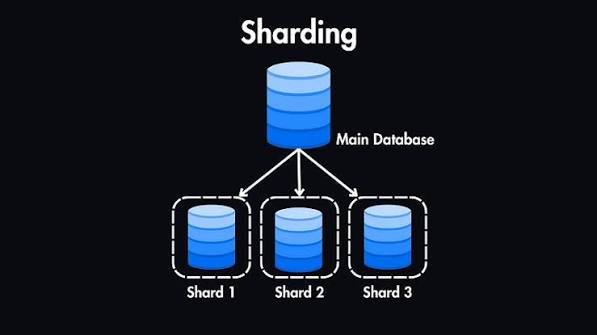
Picture a single librarian standing behind one enormous front desk, trying to check out books for an entire city. At first, she manages fine. Then the city grows. The line stretches out the door, down the block, around the corner. No matter how fast she works, she is still one person at one desk. This is what happens to a database when traffic outgrows its single server: no amount of tuning saves a system that has simply run out of hands. Data sharding and horizontal scaling are the answer , not hiring a faster librarian, but opening branch libraries across the city, each holding a slice of the collection, all working together as if they were still one grand institution.
The Librarian Who Became a Library System
A single database server is a librarian with a filing cabinet. Sharding splits that cabinet into many smaller cabinets, distributed across separate servers, each holding a defined slice of the data , customers A through M in one branch, N through Z in another. Horizontal scaling is the decision to keep adding branches rather than building one impossibly large cabinet. The reader browsing the system never notices the split. A query arrives, a router quietly determines which branch holds the answer, and the response returns as if it came from a single, unified desk. This invisible choreography is what separates elegant sharding from chaos.
Choosing the Right Key Is Choosing the Right Neighborhood
The hardest decision in sharding is the shard key , the rule deciding which branch gets which record. Choose poorly, and one branch becomes so popular it buckles while others sit half-empty, a problem engineers call a “hot shard.” Choose by geography, customer ID, or a hashed value, and the goal stays the same: spread the crowd evenly so no single desk becomes the bottleneck the system was built to avoid. It is less a technical formula than an act of urban planning , anticipating where the foot traffic will go before the doors even open.
When the Branches Must Talk to Each Other
The uncomfortable truth about distributing data is that some questions can only be answered by consulting multiple branches at once. A report on “all customers who purchased in the last month” might need every shard to contribute a piece of the answer, which the system must then stitch together , a process called a scatter-gather query. Handled well, this feels seamless. Handled poorly, it turns a simple question into a citywide phone tree, with delays compounding at every stop. This is precisely the kind of systems thinking that a well-structured data analyst course spends real time on, because knowing how to model relationships across distributed nodes is a different skill from writing a query against a single table.
Growing Without Rebuilding the Whole City
The quiet genius of horizontal scaling is that growth no longer means demolishing the old building to construct a bigger one. When traffic increases, engineers add another branch and rebalance the load , a technique called resharding. Modern distributed databases automate much of this, migrating slices of data in the background while the system stays open for business. It is the equivalent of a city adding a new library wing overnight, patrons never realizing a single book moved. This elasticity is why platforms serving hundreds of millions of simultaneous users absorb sudden traffic spikes , flash sales, viral moments, global broadcasts , without the entire system buckling under weight it was never designed to carry alone.
Consistency, Trust, and the Cost of Being Everywhere at Once
Spreading data across many servers introduces a subtle tension: how do you guarantee that a change made in one branch is instantly reflected everywhere else? This is the heart of the CAP theorem, a foundational idea anyone pursuing a data analyst course eventually confronts , the understanding that distributed systems must trade off between consistency, availability, and tolerance to network failure. Engineers choose their trade-offs deliberately, favoring strict consistency for financial transactions and favoring availability for social feeds where a few seconds of staleness is harmless. Sharding, in this sense, is never just an engineering decision. It is a philosophy about what kind of imperfection a system can live with.
Conclusion: One System, Many Hands
Sharding and horizontal scaling do not eliminate complexity , they redistribute it, the same way a city redistributes its crowds across many doors instead of one. What began as an overwhelmed librarian at a single desk becomes a coordinated network of branches, each doing its share, all appearing to the outside world as one seamless whole. As data continues to grow past what any single machine could hold, this redistribution is not an optional optimization. It is the quiet architecture beneath nearly everything we now consider instant.
For more details visit us:
Business Name:ExcelR- Data Science, Data Analyst, Business Analyst Course Training in Delhi
Address: M 130-131, Inside ABL Work Space,Second Floor, Connaught Cir, Connaught Place, New Delhi, Delhi 110001
Phone Number:9632156744
Email Id: [email protected]
