

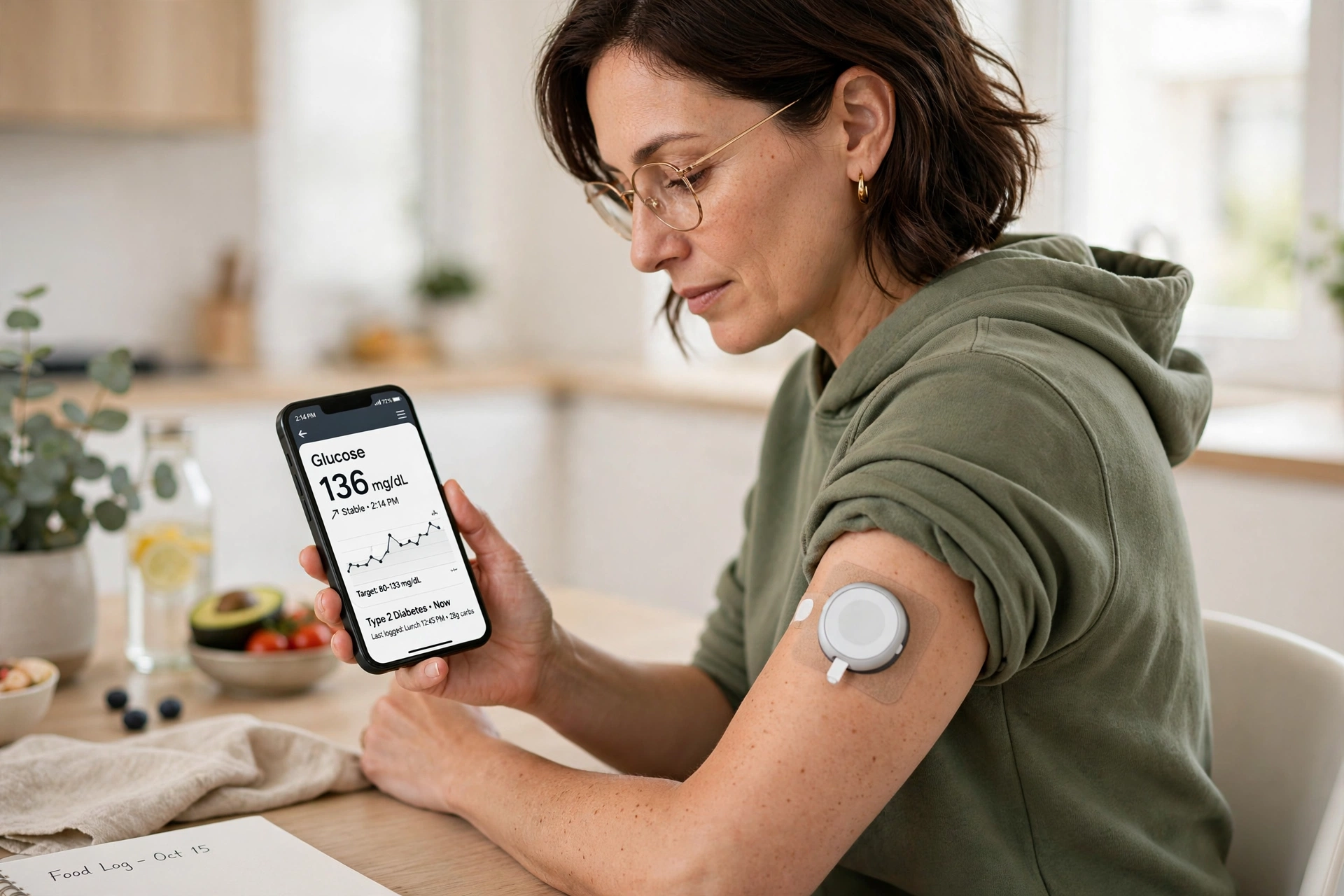
A Small Sensor, a Large Daily Difference
Continuous glucose monitors have transformed care for many people who use insulin, but their value for the much larger group of adults with type 2 diabetes who do not use insulin has been less certain. A major new clinical trial, described as the largest of its kind and published in the New England Journal of Medicine, now offers a clear answer: wearing a continuous glucose monitor helped participants spend approximately five more hours each day in their target blood sugar range.
Five hours is not a marginal gain. Time in range is increasingly treated by clinicians as one of the most meaningful measures of day-to-day diabetes control, because it captures the long stretches between finger-prick tests that patients previously could not see. The findings, summarised by the University of Colorado Anschutz Medical Campus, suggest that real-time feedback alone can change behaviour and outcomes in powerful ways.
How the Trial Worked
Participants wore a small sensor, usually on the upper arm or abdomen, that measures glucose in the fluid between cells every few minutes and sends the readings to a phone or receiver. Instead of a handful of snapshots a day, they could see trends: a rise after breakfast, a dip during an afternoon walk, a steadier line overnight. Researchers then compared time spent in the healthy target range against a control approach, and the difference accumulated to roughly five additional hours a day in range.
That visibility matters because diabetes management is largely a series of small, daily decisions. What to eat, when to move, how stress and sleep are affecting readings — all of these become easier to judge when cause and effect appear on a graph within minutes. Several participants in studies of this kind report that the monitor acts less like a medical device and more like a coach, quietly rewarding a short walk after dinner with a visibly flatter glucose curve.
Why Feedback Changes Behaviour
Behavioural science offers a simple explanation: feedback that is immediate, personal and easy to understand tends to change habits far more reliably than general advice. A leaflet can say that a walk lowers blood sugar; a monitor shows exactly how much, and how quickly, for your own body. Over weeks, those small confirmations build confidence and help people identify their personal triggers, from a particular breakfast cereal to a poor night’s sleep.
Readers who enjoyed our guide to Managing Notifications Without Losing Important Alerts will recognise a related challenge here. A device that reports every few minutes is only helpful if its alerts are tuned well; constant alarms can cause people to ignore or abandon the technology altogether. The most successful users tend to set thoughtful thresholds and review trends weekly rather than reacting to every single reading.
What This Could Mean for Everyday Care
If the results hold up in wider practice, they strengthen the case for offering continuous glucose monitors much more broadly to people with type 2 diabetes, including those managing their condition with lifestyle changes and oral medication alone. Better time in range is associated with a lower risk of the complications that make diabetes so serious over time, including damage to the eyes, kidneys and nerves. Even modest improvements, sustained over years, could translate into meaningful gains in quality of life.
There are practical questions to answer. Sensors cost money, supplies must be replaced regularly, and health systems will need evidence that the benefits justify wider reimbursement. Access is uneven, and the people who might benefit most are often those least able to pay out of pocket. Guidance from organisations such as the American Diabetes Association will play an important role in shaping who is offered a monitor and what training accompanies it.
Cautions and Next Steps
Experts also stress that a monitor is a tool, not a treatment in itself. Readings can lag behind blood glucose during rapid changes, sensors can occasionally be inaccurate, and the stream of data can feel overwhelming or anxiety-provoking for some patients. Good programmes pair the technology with education and clinician support, so that data leads to decisions rather than worry. Our coverage of everyday wellbeing topics, including Natural Beauty Practices: A Guide to Skincare and Hair Care Essentials, reflects the same principle: sustainable results come from informed routines, not gadgets alone.
Even with those caveats, the headline finding is striking. Five more hours a day in a healthy range, achieved largely by making the invisible visible, is the kind of result that can shift guidelines, insurance decisions and daily habits alike. For millions of adults living with type 2 diabetes, a small white sensor may soon become as ordinary — and as valuable — as the blood pressure cuff.
