

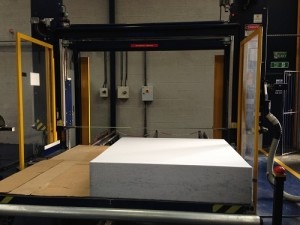
Foam is often associated with simple products such as cushions, packaging inserts, mattresses, and protective padding. However, its real potential becomes much greater when it is accurately shaped, cut, layered, bonded, or fabricated for a particular purpose. This is where Foam conversion becomes an important manufacturing process.
Instead of using a standard sheet or block of foam as it comes from the manufacturer, conversion allows manufacturers to transform the material into a component with precise dimensions and functional characteristics. Depending on the application, foam may need to absorb sound, provide thermal insulation, protect equipment, improve comfort, or fill an unusually shaped space.
A professional Foam converter can use a combination of specialist machinery and manufacturing knowledge to turn basic foam materials into highly practical components for different industries.
What Is Foam Conversion?
Foam conversion is the process of modifying foam materials into specific shapes, dimensions, and finished components. The conversion process can be relatively straightforward, such as cutting a large sheet into smaller pieces, or highly technical, involving CNC profiling and other precision manufacturing methods.
The purpose is not simply to change the appearance of foam. The objective is to make the material suitable for a particular engineering, acoustic, protective, or commercial requirement.
For example, a manufacturer may begin with a standard foam block and produce:
- Custom acoustic panels
- Protective packaging inserts
- Insulation components
- Seating and cushioning
- Automotive interior parts
- Equipment protection
- Bespoke sound-absorbing components
This flexibility makes foam useful across numerous applications where standard off-the-shelf products may not provide the required dimensions or performance.
Why Different Foam Materials Require Different Approaches
Not every foam behaves in the same way. Its density, flexibility, resilience, moisture resistance, and structure can affect how it should be processed.
Polyurethane Foam
Polyurethane foam is commonly associated with cushioning, seating, mattresses, packaging, and insulation. Its flexible characteristics make it suitable for applications where comfort or energy absorption is required.
During conversion, polyurethane foam can be cut and profiled into specific shapes according to the requirements of a finished product.
Polyethylene Foam
Polyethylene foam offers useful durability and moisture resistance. These properties make it particularly suitable for protective packaging, padding, insulation, and applications where the material may encounter demanding conditions.
Its structure can be converted into inserts or protective shapes designed around individual products.
Polystyrene Foam
Polystyrene foam is lightweight and has useful insulating properties. It is frequently used where low weight and protection are important considerations.
The conversion process can turn larger quantities of material into application-specific components rather than relying on generic shapes.
Techniques Used By a Foam Converter
One of the major advantages of working with a specialist Foam converter is access to different processing techniques. The appropriate method depends on the material, required dimensions, design complexity, and intended application.
Precision Cutting
Cutting is one of the fundamental conversion methods. Foam sheets and blocks can be reduced to specified dimensions for use in packaging, insulation, seating, and other products.
Accurate cutting helps ensure that individual components fit correctly during final assembly.
Slitting
Slitting allows foam sheets to be reduced to particular thicknesses or widths. This can be useful when a project requires material that differs from standard stock sizes.
Rather than redesigning a product around an available foam sheet, manufacturers can modify the material to better suit the project.
CNC Profiling
Complex foam shapes may require considerably more than straight-line cutting. CNC profiling can produce detailed and repeatable profiles based on a specific design.
This makes it valuable for bespoke acoustic products and technical components where shape has an important role in the final performance.
Water Jet Cutting
Water jet technology can be used when highly accurate shapes are required. It can provide flexibility when producing intricate profiles and components from suitable foam materials.
This approach is particularly useful when a project involves unusual dimensions or a design that would be difficult to achieve using conventional cutting methods.
Laminating
Some applications require foam to be combined with another layer of foam or a different material. Laminating makes this possible.
By combining layers, manufacturers can create components with characteristics that a single piece of foam may not provide.
Foam Conversion for Acoustic Applications
Sound management is an area where converted foam can provide particularly valuable solutions.
A standard foam product may not fit around machinery, equipment, vehicles, or architectural structures. Through profiling and fabrication, foam can be shaped around specific areas where sound absorption is needed.
For example, an acoustic component could be designed to fit around equipment or into an irregular space. This allows manufacturers to address practical problems instead of relying entirely on standard acoustic products.
Foam conversion can therefore contribute to solutions in construction, transportation, industrial environments, marine applications, and other sectors where controlling unwanted sound is important.
Benefits of Foam Conversion
1. Greater Design Flexibility
One of the biggest benefits is the ability to produce components according to individual specifications. Customers are not necessarily restricted to standard dimensions.
2. Better Material Utilisation
Accurate cutting and profiling can help manufacturers produce the required component from larger foam sheets, blocks, or rolls while planning production around the required dimensions.
3. Suitable for Complex Shapes
CNC equipment and other specialist techniques allow manufacturers to create profiles that would be difficult to achieve through basic cutting.
4. Improved Product Integration
Converted foam can be designed to fit directly into another product or assembly. This is particularly useful in automotive, industrial, packaging, and acoustic applications.
5. Solutions for Specialist Problems
Perhaps the most important advantage is problem-solving. Foam can be adapted when a simple standard product does not address the requirements of a particular application.
Applications Across Different Industries
Foam conversion is not limited to one sector. Its versatility allows it to be used in a broad range of manufacturing environments.
In the automotive industry, converted foam may be used for headrests, armrests, interior insulation, and other components.
In construction, foam can contribute to thermal insulation and acoustic solutions.
In packaging, shaped inserts can help prevent delicate equipment from moving or becoming damaged during transportation.
In furniture, accurately shaped foam provides the foundation for cushions and seating products.
The marine sector can also benefit from converted foam, particularly where insulation and sound management are required in restricted or technically challenging spaces.
Medical and healthcare applications may involve customised cushions, supports, and other components where dimensions and comfort are important.
Choosing the Right Foam Conversion Partner
Selecting a suitable conversion company involves more than checking whether it can cut foam. A capable supplier should understand the relationship between material properties, manufacturing techniques, dimensions, and the intended application.
A specialist company may use equipment such as band saws, profiled slitters, CNC profiling machines, laminators, water jets, spray booths, and die-cut presses. Having access to multiple processes provides greater flexibility when developing a solution.
It is also worth considering quality control, production consistency, technical experience, and the ability to work from customer specifications.
Conclusion
Foam conversion transforms ordinary foam materials into components designed around real-world requirements. Through cutting, slitting, profiling, laminating, water jet processing, and other techniques, foam can be adapted for acoustic, protective, insulating, cushioning, packaging, automotive, and industrial applications.
The value of a professional Foam converter lies not only in changing the shape of foam but also in understanding how the finished component needs to perform.
When a standard foam product is not enough, specialist conversion can provide the flexibility needed to develop a more precise and practical solution.
