

Astronomers have formally confirmed 128 new moons of Saturn, according to the recognised catalogue maintained by the International Astronomical Union, raising the planet’s total to 274. The figure establishes Saturn as the planet with the largest number of known moons in the solar system, ahead of Jupiter, which has 95 confirmed moons.
The objects are classified as irregular moons. They are small, generally a few kilometres in diameter, and follow distant, inclined and frequently retrograde orbits. Researchers state that these orbital characteristics indicate the moons are a mixture of captured bodies and collisional fragments, produced when larger moons were disrupted by impacts.
Observational record
The moons were detected in survey data from the Canada-France-Hawaii Telescope. The observing team, which includes researchers affiliated with the University of British Columbia, applied a shift-and-stack technique to deep image sets, combining exposures along predicted orbital paths to reveal objects below the threshold of individual frames.
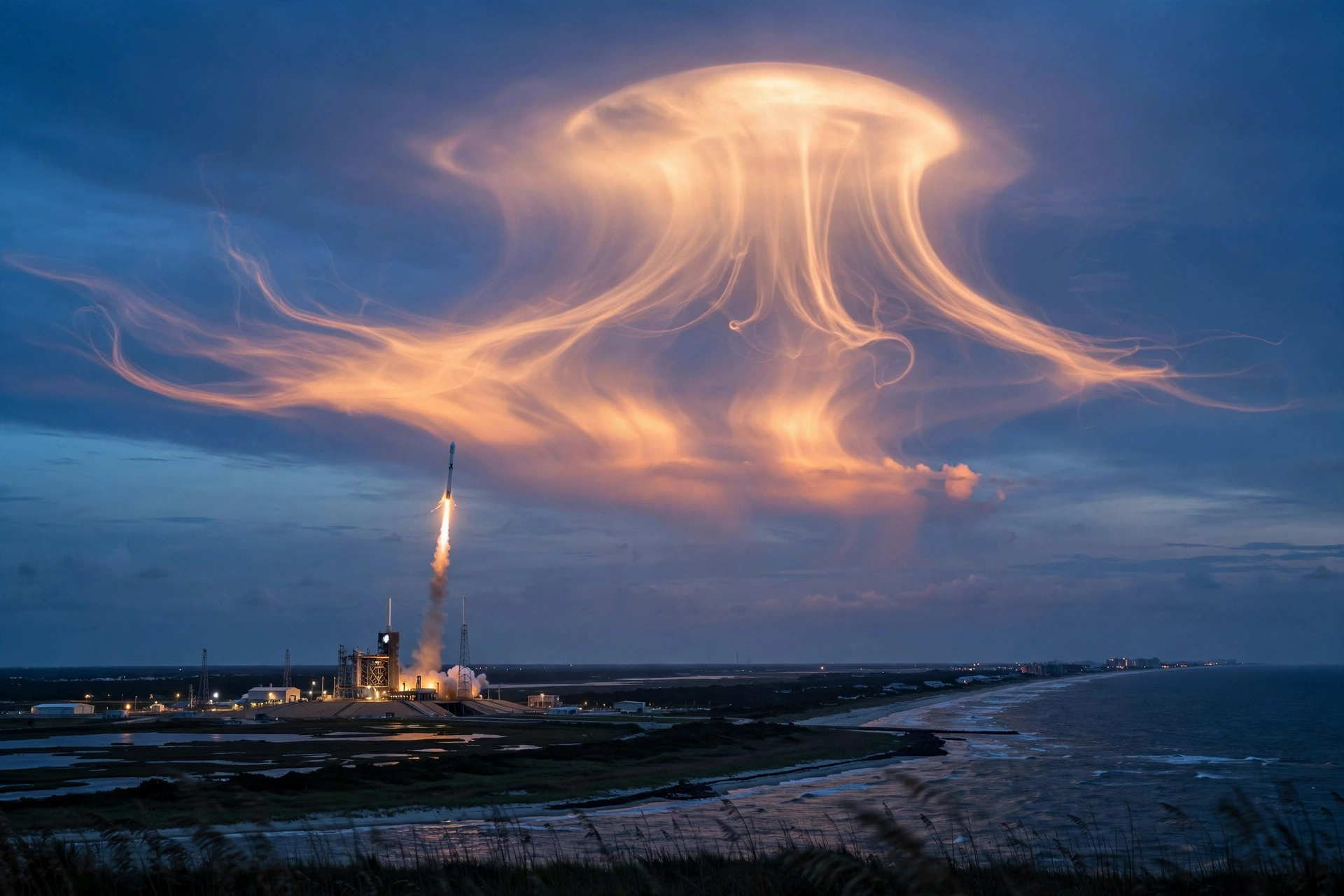
Confirmation required multi-year follow-up to establish closed orbits around Saturn and to exclude background asteroids. Details of the wider research programme are available from the University of British Columbia. The record contrasts with our recent report on the SpaceX launch visible across the US East Coast, which was documented within hours rather than years.
Implications for planetary science
According to the researchers, the new moons fall into orbital families consistent with a small number of parent bodies. Dating those families constrains the timing of collisions in the Saturn system, and preliminary analysis suggests at least some disruption events occurred within the past several hundred million years, considerably later than the era of planet formation.
The expanded catalogue also affects population models used to estimate how many small bodies orbit the giant planets, figures that feed into assessments of impact rates and the evolution of ring systems. No minimum diameter currently applies to the definition of a moon, and specialists note that continued deep surveys could raise Saturn’s total substantially further, potentially requiring revised cataloguing conventions.
Technical note on the catalogue
According to the data released with the announcement, the confirmed moons range widely in orbital period, with the most distant requiring several years to complete a single circuit of Saturn. Their inclinations, the tilt of their orbits relative to the planet’s equator, are in many cases extreme, reinforcing the interpretation that they did not form from the disc of material that produced Saturn’s rings and its regular inner moons. Instead, their properties match the expected signature of objects captured during the later stages of the solar system’s formation, subsequently modified by mutual collisions over billions of years.
The catalogue update has been entered into the standard references used by observatories and mission designers, and the underlying astrometry has been published for verification. Independent teams are expected to re-observe selected moons during the next favourable observing window to refine their orbital elements further. Such refinement is routine and occasionally results in small revisions to predicted positions, although the existence of the objects themselves, having satisfied the recognition criteria, is not in question. The total of 274 is therefore regarded by specialists as a firm figure, subject only to upward revision as additional survey results are processed.
Educational and reference publishers have been notified of the revision through the usual channels, and digital references are expected to reflect the new total in forthcoming updates. The confirmed figure also supersedes a series of provisional counts circulated during the review period, which should not now be cited. Observatories holding unpublished survey data covering the Saturn system have been encouraged to compare their records against the published positions, a standard step that occasionally identifies additional candidates or improves the precision of existing orbital solutions ahead of the next recognition round.
Further observations are scheduled as telescope time allows, and the survey team has indicated that additional candidates from the same data set remain under review. The confirmed total of 274 moons is expected to be updated as that verification work is completed and submitted for formal recognition.
