

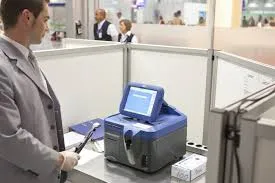
Modern airport security requires a multi-layered approach to counter increasingly sophisticated threats. With millions of travelers and vast volumes of cargo passing through international airports daily, the demand for fast, accurate, and proactive screening systems has never been higher. Among the various technologies deployed to protect air transport, the explosives trace detection system has emerged as a vital tool in identifying and intercepting concealed threats before they can cause harm.
These systems, capable of detecting microscopic traces of explosive substances, provide a crucial safeguard not only for passengers and personnel but also for critical airport infrastructure. As security challenges continue to evolve, explosives trace detection (ETD) offers a responsive and intelligent solution to meet stringent safety requirements.
The Critical Need for Explosives Screening in Aviation
Airports have long been high-priority targets for criminal and terrorist activities. From attempted bombings to smuggling operations, aviation threats have historically prompted the development of new screening technologies. While traditional X-ray scanners and metal detectors remain essential, they often focus on physical objects and shapes. Explosives, particularly those that are non-metallic or chemically concealed, require more specialized detection methods.
This is where ETD systems play a pivotal role. Unlike visual inspection tools, these systems rely on chemical analysis to detect traces of explosive materials left behind on surfaces such as luggage, clothing, or even the skin of individuals. Because most explosives leave behind minuscule but detectable residues, trace detection offers a significant advantage in early threat identification.
How Explosives Trace Detection Systems Work
An explosives trace detection system typically operates using technologies such as ion mobility spectrometry (IMS) or mass spectrometry. The process usually involves collecting a sample from a person, bag, or object using a swab or suction method. The collected material is then analyzed to detect the presence of specific chemical signatures associated with explosive compounds.
These systems are highly sensitive and capable of identifying substances in nanogram quantities. Advanced versions can analyze multiple compounds simultaneously, ensuring a broader detection range and faster throughput, both of which are essential in busy airport settings.
ETD systems are commonly deployed at:
- Passenger screening checkpoints
- Checked baggage screening areas
- Cargo and freight inspection terminals
- Perimeter security gates and vehicle entry points
By integrating into various access and transport control stages, ETDs contribute to a robust, all-encompassing security architecture.
Integration with Broader Security Ecosystems
Explosives trace detection systems do not operate in isolation. They are most effective when integrated with other security technologies, forming part of a layered defense strategy. Under Vehicle Scanning Systems – Then & Now have evolved significantly, offering advanced imaging and automated threat detection capabilities. When paired with ETD systems, they enhance the ability to uncover threats concealed in vehicle compartments, especially in high-risk areas like airport entry points.
Under vehicle scanners provide a real-time visual inspection of a vehicle’s undercarriage, which can reveal smuggled explosives or unauthorized modifications. When integrated with ETDs, this creates a dual-layer checkpoint where vehicles are screened both visually and chemically, enhancing perimeter control efficiency.
Furthermore, ETD data can be fed into centralized surveillance systems, allowing real-time threat assessments and seamless coordination among security teams. Integration with passenger databases and AI-powered analytics platforms also improves risk profiling and operational awareness.
Advantages of Explosives Trace Detection in Airports
The growing adoption of explosives trace detection systems in aviation security is driven by several core advantages:
- High Sensitivity and Accuracy: Capable of detecting extremely small traces of explosive materials, making them ideal for screening surfaces that may carry contamination.
- Non-Intrusive Screening: ETD allows for rapid screening without invasive procedures, preserving passenger dignity and reducing processing time.
- Rapid Response Capabilities: Real-time detection enables immediate response from security personnel, preventing delayed identification of threats.
- Portability and Flexibility: Many ETD systems are portable, allowing for flexible deployment at checkpoints, boarding gates, and random inspection zones.
- Adaptability: As new explosive materials are developed, ETD software and libraries can be updated to detect emerging threats, ensuring long-term viability.
These advantages make ETDs one of the most dynamic and responsive technologies in airport security arsenals.
Addressing Operational Challenges
While explosives trace detection systems offer significant benefits, their effective deployment requires addressing a few practical challenges:
- False Positives: Highly sensitive equipment may occasionally flag harmless substances with similar chemical signatures. Fine-tuning system parameters and incorporating AI can reduce false alerts.
- Environmental Factors: Airport environments with high passenger volume, varied temperature ranges, and airborne particles may affect detection accuracy. Shielding and environmental controls can mitigate this.
- Throughput and Maintenance: ETDs must balance accuracy with processing speed. Frequent calibration and maintenance are essential to keep systems efficient and reliable.
Training personnel to correctly interpret results and handle alerts is also critical. An over-reliance on technology without skilled human oversight can diminish overall security effectiveness.
Conclusion
Airports are the nerve centers of international travel and commerce, making them prime targets for security breaches. The introduction and advancement of explosives trace detection systems have significantly bolstered the capacity of aviation security teams to detect and neutralize threats before they manifest.
By offering chemical-level scrutiny in a fast, non-intrusive manner, ETD systems fill a critical gap in traditional security frameworks. When integrated with other intelligent surveillance solutions like under vehicle scanning systems and AI-powered analytics, they create a security net capable of addressing both current and future risks.
As airports continue to scale and evolve, investing in comprehensive detection technologies will remain essential to safeguarding passengers, infrastructure, and national security.
