

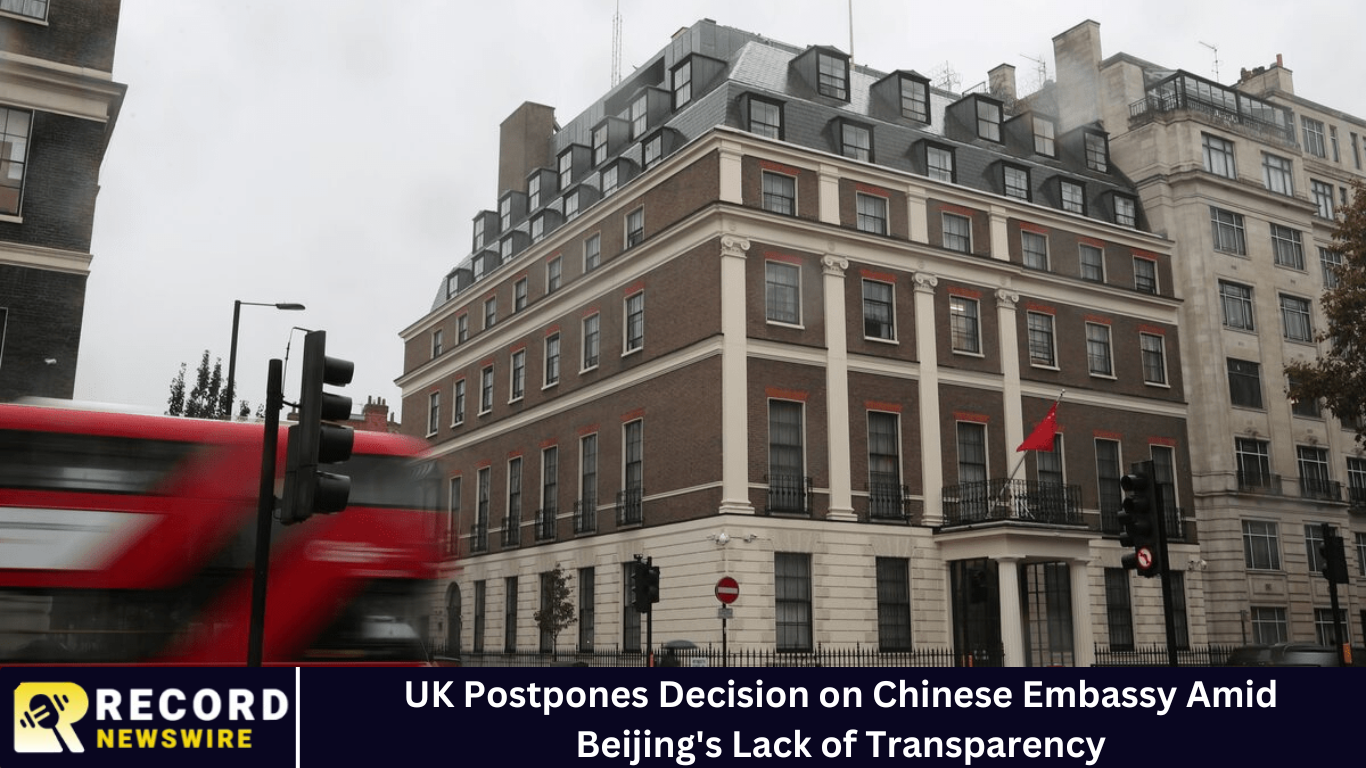
In a move that underscores growing diplomatic tension between the United Kingdom and China, the British government has announced an extension of its decision deadline on whether to approve China’s long-stalled plans to build what would be the largest Chinese embassy in Europe.
The decision, now delayed until October, comes after Beijing reportedly failed to provide crucial explanations for redacted or blacked-out sections in its planning documents. The proposed embassy site is a two-century-old historic complex near the Tower of London, a location steeped in British history.
However, the project has faced mounting criticism from local authorities, human rights advocates, security experts, and members of Parliament. At the core of the current delay is Beijing’s lack of transparency, particularly its refusal to clarify the nature of certain restricted areas within its submitted architectural plans.
More Read: Government Allocates Rs. 27 Billion Financial Package for Utility Stores Corporation
Background: China’s Plans for a New Embassy in London
In 2018, China purchased the historic Royal Mint Court property — located directly across from the Tower of London — for approximately £250 million. The sprawling site includes several Grade II listed buildings and is considered one of the most strategically significant locations in London.
Beijing’s goal was clear: to transform the site into its flagship European diplomatic outpost — a massive embassy compound that would symbolize China’s rising global influence. The proposed development would include office space for diplomats, housing for staff, security features, and visitor facilities.
However, despite initial progress, the project quickly ran into hurdles. The Chinese government submitted formal planning applications to the Tower Hamlets Council in 2021. Yet, those applications were met with resistance, leading to the council unanimously rejecting the proposal in December 2022.
Local Opposition and Security Concerns
One of the primary reasons for the rejection and ongoing delays has been the intensity of local opposition.
1. Security Risks
Many residents and security analysts have expressed fears over the proximity of such a large foreign mission — particularly one representing an authoritarian regime — to key landmarks like the Tower of London and critical infrastructure.
Some intelligence experts have warned that a Chinese diplomatic compound of this scale could pose surveillance risks or be used for activities not in alignment with UK security interests.
Given the strained relationship between London and Beijing — especially after the Huawei 5G network controversy, the Hong Kong crackdown, and the Uyghur human rights abuses — the embassy’s proposed location has only added fuel to the fire.
2. Human Rights and Ethical Concerns
Local councils and human rights organizations, including Amnesty International and Free Tibet, have voiced opposition to the embassy’s establishment. Critics argue that allowing China such a prominent diplomatic footprint in the UK, while it continues to face global condemnation for its human rights record, would send the wrong message.
A petition led by local residents garnered thousands of signatures, calling for the UK government to block the development entirely. MPs from across the political spectrum have also spoken out against the plans.
Lack of Transparency From Beijing
The most recent delay stems from what UK officials have described as a “lack of transparency” in China’s most recent submissions.
According to government sources, the planning documents submitted by Chinese authorities contain several blacked-out or redacted areas. When pressed for clarification, Beijing reportedly failed to provide satisfactory explanations for these omissions.
UK planning and intelligence agencies have flagged these redactions as a potential red flag, citing concerns over undisclosed intentions and insufficient cooperation from the Chinese side.
Why Transparency Matters in Diplomatic Projects
Embassy buildings, especially those involving nations with tense bilateral relations, are subject to high levels of scrutiny. Planning authorities must evaluate not just the architectural and historical impact but also consider national security implications. Any refusal by a foreign government to fully disclose the nature and purpose of planned facilities raises suspicions and complicates the approval process.
For the UK, already navigating complex issues with China — including cybersecurity threats, espionage allegations, and geopolitical rivalries — Beijing’s failure to be forthcoming is unacceptable.
Implications for UK-China Relations
The embassy delay is not occurring in a vacuum. It reflects broader diplomatic and geopolitical tensions between the two nations.
1. A Relationship in Decline
Over the past five years, UK-China relations have deteriorated significantly. Once hailed as entering a “Golden Era” during the David Cameron administration, ties have since cooled dramatically. Key flashpoints include:
- The UK’s decision to ban Huawei from its 5G networks
- Beijing’s crackdown on freedoms in Hong Kong
- The UK granting asylum and special visas to Hong Kong residents
- Sanctions exchanged over China’s treatment of Uyghur Muslims
- Allegations of Chinese espionage and cyber-attacks in the UK
The embassy dispute now adds another layer to this troubled relationship. Diplomats from both sides have exchanged increasingly pointed statements, with China accusing the UK of “politicizing” a standard planning process and the UK stressing the importance of transparency and public accountability.
2. Diplomatic Reciprocity at Stake
One of the arguments frequently made by British officials is the principle of diplomatic reciprocity. UK embassies in China operate under strict and sometimes opaque rules imposed by Beijing. In contrast, the UK provides significant freedom for foreign missions, including China’s.
Some MPs and policy analysts argue that granting China an expansive embassy in a sensitive location, especially when the UK faces numerous restrictions in China, is both unfair and unwise.
The British Government’s Delicate Balancing Act
The decision to extend the planning deadline until October reflects a deliberate attempt by the British government to buy time — not just to evaluate Beijing’s revised plans but to carefully weigh the political, diplomatic, and public implications of the project.
Political Calculations
With a general election looming and China increasingly becoming a domestic political issue, Downing Street is likely trying to avoid inflaming public opinion. Any decision seen as too lenient toward China could attract criticism from opposition parties, the media, and the public.
At the same time, the UK must manage its international obligations under the Vienna Convention, which allows for the establishment of diplomatic missions. Outright rejection without strong legal justification could provoke retaliation.
Public Pressure
Surveys show growing distrust of China among the British public. The embassy issue, especially with the added dimension of blacked-out documents, is likely to resonate with voters who are wary of foreign interference, national security threats, and human rights violations.
What Happens Next?
With the deadline now extended to October, several things could unfold:
- Beijing Submits Clarifications
China may choose to resubmit its plans with clearer, more detailed documentation to address British concerns. This could ease tensions and move the process forward — but only if trust can be reestablished. - Public Hearings and Political Debate
As the issue gains attention, it’s likely to feature in Parliamentary debates and media discussions. MPs could use the delay to push for stronger safeguards or even propose new legislation governing foreign embassies. - Diplomatic Retaliation or Escalation
If the UK ultimately rejects the plan or imposes significant limitations, China may respond with retaliatory measures, such as limiting UK diplomatic operations in Beijing or freezing certain bilateral engagements.
Broader Lessons for the West
The UK’s handling of the Chinese embassy case could set a precedent for other Western countries grappling with how to engage China diplomatically while safeguarding national security and upholding democratic values.
Rising Global Scrutiny of China’s Diplomatic Presence
Several countries have raised alarms about the scale and nature of China’s diplomatic presence abroad. In the U.S., FBI investigations have looked into suspected Chinese “police stations” operating unofficially. In Australia and Canada, concerns have been raised about the use of embassies for influence operations.
The London embassy saga highlights how countries are becoming more cautious and assertive in managing China’s diplomatic reach.
Frequently Asked Question
Why has the UK postponed its decision on the Chinese embassy in London?
The UK government has extended the decision deadline due to concerns over a lack of transparency in the planning documents submitted by China. Specifically, the documents contain blacked-out sections that Beijing has refused to explain, raising questions about the embassy’s intended use and potential security risks.
Where is the proposed Chinese embassy site located?
The proposed embassy site is at Royal Mint Court, a historic property near the Tower of London in East London. China purchased the site in 2018 for approximately £250 million, intending to build its largest diplomatic mission in Europe.
What are the main concerns about the Chinese embassy plan?
Key concerns include:
- National security risks due to the size and proximity of the site to sensitive infrastructure.
- Lack of transparency in China’s planning documents.
- Opposition from local residents and human rights groups.
- Potential surveillance or intelligence-gathering activities from the embassy.
Who opposes the embassy project in the UK?
Opposition has come from multiple sources:
- Tower Hamlets Council, which rejected the initial planning application.
- Local residents and activists, citing ethical and security concerns.
- MPs and human rights organizations, including Amnesty International and Free Tibet.
How has China responded to the UK’s delay?
China has criticized the UK for politicizing what it claims should be a standard planning issue. Beijing insists that the embassy project is legitimate and accuses the UK of using national security concerns as a pretext for delaying or blocking the development.
Could this delay impact UK-China relations?
Yes. The delay adds to a growing list of tensions between the two countries, including issues related to Hong Kong, Huawei, cyber security, and human rights. A final rejection or further complications could lead to diplomatic retaliation from China, such as restrictions on UK embassies or trade implications.
When is the UK expected to make a final decision?
The UK government has extended the decision deadline to October 2025, giving officials more time to assess security, planning, and diplomatic factors. A final ruling will depend on whether China addresses the transparency concerns and meets the planning criteria.
Conclusion
The UK’s decision to postpone a ruling on China’s proposed embassy in London is more than a local planning issue — it is a symbol of the changing tides in UK-China relations. Beijing’s lack of transparency has triggered concerns not just about architecture, but about trust, sovereignty, and the future of diplomacy in a shifting geopolitical landscape. With growing pressure from the public, Parliament, and international allies, the UK now stands at a crossroads. The final decision in October could mark a defining moment in how Britain manages its relationship with China — one that balances openness with vigilance, diplomacy with caution, and pragmatism with principle.