

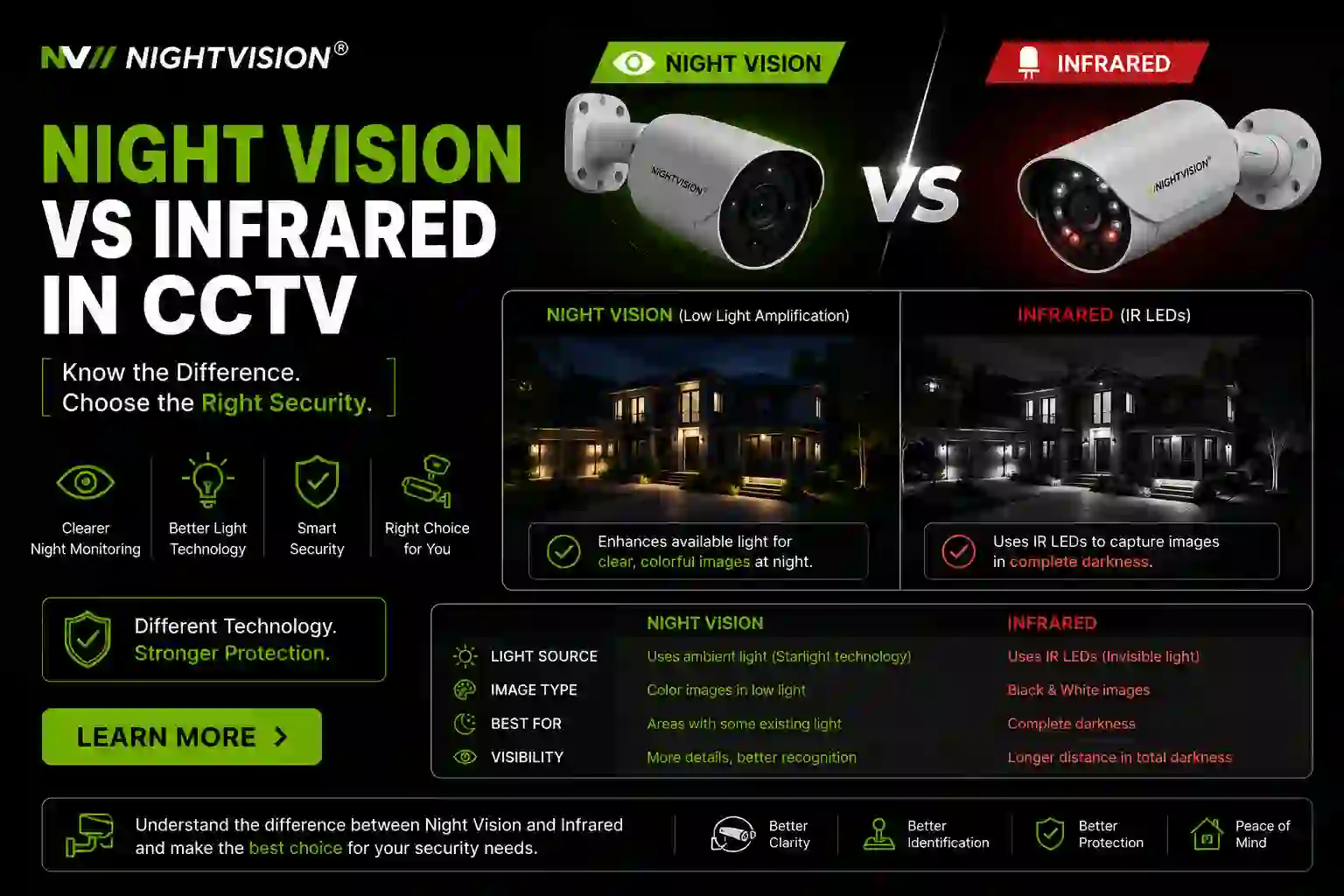
Night is when most cameras fail. The picture turns grainy, faces blur into gray shapes and the footage you hoped for is barely usable. A dual light security camera tackles this problem by giving you two night modes in one device: classic infrared and a warm white light for full-color video. Here is how it works and when each mode makes sense.
What is a dual light security camera?
A dual light camera has two kinds of illumination built in. The first is infrared (IR), which the human eye cannot see. The second is a warm white LED that lights the scene so the camera can record in color after dark. Depending on the model, you can pick one mode, switch by schedule, or let the camera change modes when motion is detected.
A good example is the Worldstar E1T-8F28-DL, an 8MP (4K) dual-light PoE turret camera with a 2.8mm lens, 120dB true WDR and smart IR or warm-light night vision up to 30 meters (98 feet). That mix of resolution, wide view and two lighting choices makes it flexible for homes and businesses alike.
How infrared night vision works
IR LEDs flood the scene with light the camera can see but people cannot. The image comes out black and white. Its biggest advantage is discretion. Nobody knows the camera is lighting the area, and there is no light pollution for neighbors.
Its weaknesses are also well known. IR images lose color detail, so a red jacket and a blue jacket look the same. Dust, insects and rain near the lens can cause bright spots. And a subject too close to the camera can wash out when the IR is too strong. Smart IR helps by lowering the power automatically as someone gets closer.
How warm light mode works
In warm light mode the camera switches on a visible LED, usually a soft white or amber tone, and records in full color. This gives you detail that matters in real investigations: clothing colors, vehicle paint, logos and skin tone.
There is a second benefit. A visible light tells a person they are being watched. Many intruders walk away the moment they see a lit camera, which means warm light works as both a recording tool and a deterrent.
The trade-offs are real, too. Visible light can disturb neighbors if it points the wrong way, and it can attract insects. It also lets someone see exactly where the camera is looking.
IR vs warm light: which one should you use?
Neither is better in every case. This quick guide can help.
| Situation | Better choice |
| You want to catch details like clothing and car color | Warm light |
| You want to deter trespassers | Warm light |
| You need a discreet, hidden-looking setup | Infrared |
| Camera faces a neighbor’s window or street | Infrared |
| Long perimeter, far-range viewing | Infrared |
| Retail entrance or storefront after hours | Warm light |
The nice thing about a dual light camera is that you do not have to commit. You can run warm light on the front door and switch to IR at the back fence, or use a schedule that changes by time of day.
Why WDR still matters
Night scenes are full of contrast: a bright street lamp, a dark alley, a car headlight. True WDR, or wide dynamic range, balances those extremes so you can read details in both bright and dark areas. Without it, a headlight can wipe out an entire car. When you compare cameras, look for solid WDR as well as the lighting features.
Best places to install a dual light camera
- Front doors, porches and driveways
- Retail store entrances and loading areas
- Parking lots and back lots
- Gates, yards and side alleys
- Office entrances and reception areas
Turret cameras are a smart pick for these spots because there is no dome bubble to cause IR reflections. They are also easy to mount under eaves and soffits.
Setup tips that make a difference
- Aim the camera slightly downward so the light reaches the area you care about instead of the sky.
- Keep the lens clean. Spider webs near the lens are a classic cause of IR glare.
- Avoid mounting right next to a wall or pillar, which bounces the IR back into the lens.
- Test both modes at night before finishing the job, and choose the one that suits the scene.
- Pair the camera with an NVR that supports 8MP so you keep all that detail.
Common mistakes
- Buying a high-resolution camera but ignoring night performance
- Using warm light facing a neighbor’s property and causing complaints
- Mounting too high, which makes faces small and hard to identify
- Forgetting to set a schedule, so the light stays on all night for no reason
Final thoughts
A dual light security camera gives you control over how your system behaves after dark. Use infrared when discretion and range matter, and switch to warm light when you need color detail and a visible deterrent. Add 4K resolution and solid WDR, and you get footage that is actually useful at night. Browse the turret and dome range to find a dual light model that matches your site.