

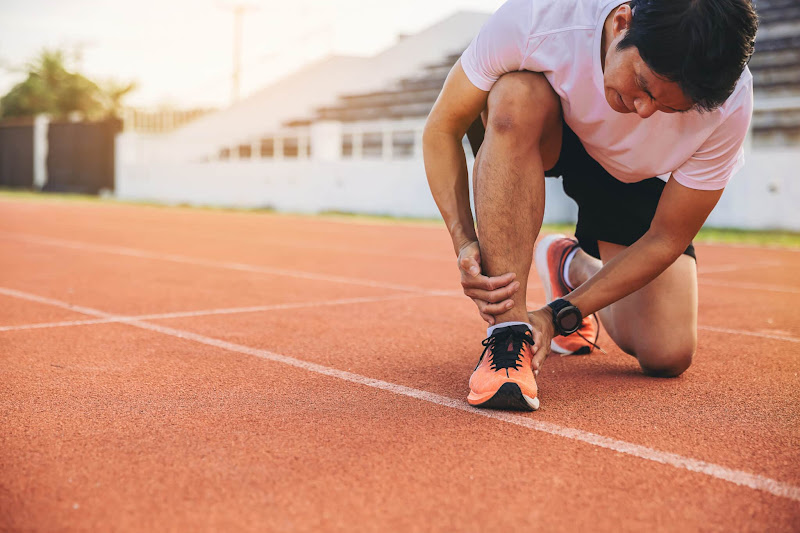
Every serious athlete hits this wall at some point. Something starts hurting, not from a single incident but from weeks of accumulated stress on the same tissue. The instinct is to push through. The smarter move is understanding what is actually happening and finding a way to keep training without making it worse.
At Total Performance Physical Therapy, we work with athletes who want to stay moving during recovery. Most of the time, with the right approach, they can.
What Is an Overuse Injury
Overuse injuries do not have a moment of origin. They develop gradually as repetitive stress accumulates faster than the body can repair it. Tendons, bones, and cartilage all have a threshold. Cross it consistently without adequate recovery and the tissue starts to break down.
Common areas include the patellar tendon in runners, the rotator cuff in throwing athletes, and the elbow tendons in racket sports. Tendonitis physical therapy addresses many of these, but the key is catching the pattern before it becomes a structural problem.
What Usually Causes Them
Sudden spikes in training volume are the most common triggers. The body needs time to adapt to new loads. When that window is compressed, tissue gets overloaded before it can strengthen. Poor recovery habits, improper movement mechanics, and gaps in mobility or strength balance all compound the problem, quietly shifting stress onto structures that were not built to absorb it repeatedly.
Signs Worth Paying Attention To
Pain that worsens during or after a specific activity is an early warning. Persistent soreness that does not clear with a day of rest is another. Swelling, dropping performance, or recurring pain in the same movement pattern session after session are all signals the tissue is under more load than it can manage.
Can You Keep Training Through It
How to recover from an overuse injury without stopping training is a question we hear constantly. The honest answer is usually yes, but not by doing the same thing and hoping for the best.
Complete rest is rarely the optimal approach. Controlled, modified movement keeps blood flowing to the tissue, maintains fitness, and prevents the deconditioning that makes return to full training harder. What needs to change is the type, volume, and intensity of load on the injured area. Pushing through significant pain is different. Pain is the tissue communicating that it is under more stress than it can handle. Overriding that signal usually accelerates the injury.
How We Help Athletes Stay Active
Total Performance Physical Therapy sports rehab services start with a movement and injury assessment. We identify what is overloaded, why it is overloaded, and what modifications will reduce stress on that tissue while keeping the athlete moving.
An injured runner might shift to pool running or cycling. A throwing athlete might maintain lower body conditioning while the shoulder recovers. Movement pattern corrections address the mechanics driving the overload, which is what prevents the same injury returning after full training resumes. Athlete recovery physical therapy in East Norriton is not about putting training on hold. It is about reshaping it so the body keeps moving forward while the injured tissue catches up.
Smart Ways to Keep Moving
The starting point is pulling back on whatever is aggravating the tissue, not everything. Low-impact alternatives fill the gap, keeping fitness moving without poking at what is already irritated. Swimming, cycling, rowing, and strength work in unaffected areas all keep conditioning up while the primary injury heals. How to recover from an overuse injury without stopping training is ultimately about redirecting effort rather than eliminating it.
What Treatment Involves
Tendonitis physical therapy at Total Performance Physical Therapy draws from several approaches. Manual therapy reduces tissue tension and improves circulation. Mobility work goes after the restrictions that shifted load onto the wrong structures in the first place. Strengthening rebuilds what was too weak to do its job, so the tissue that got overloaded does not have to carry that burden alone again. Sports injury rehab in Harleysville is structured around clear progression points. Athletes know where they stand, what still needs work, and what has to happen before the load goes back up.
Mistakes That Slow Recovery Down
A few patterns consistently make overuse injuries worse and longer. Training at full intensity through pain is the most common. Coming back to full load before the tissue has actually recovered is another. Skipping warm-up and recovery routines removes the small margins that protect against re-injury. And continuing to train with the same mechanics that caused the problem ensures it will come back.
When to See a Physical Therapist
Pain lasting more than a few days without improvement, repeated injuries to the same area, and noticeable losses in strength or mobility are all reasons to stop managing it alone. Sports injury rehab in Harleysville and athlete recovery physical therapy in East Norriton at Total Performance Physical Therapy sports rehab services are built around getting athletes back to full training, not just out of pain. Early treatment shortens recovery, protects long-term performance, and keeps athletes doing what they are built to do.
