

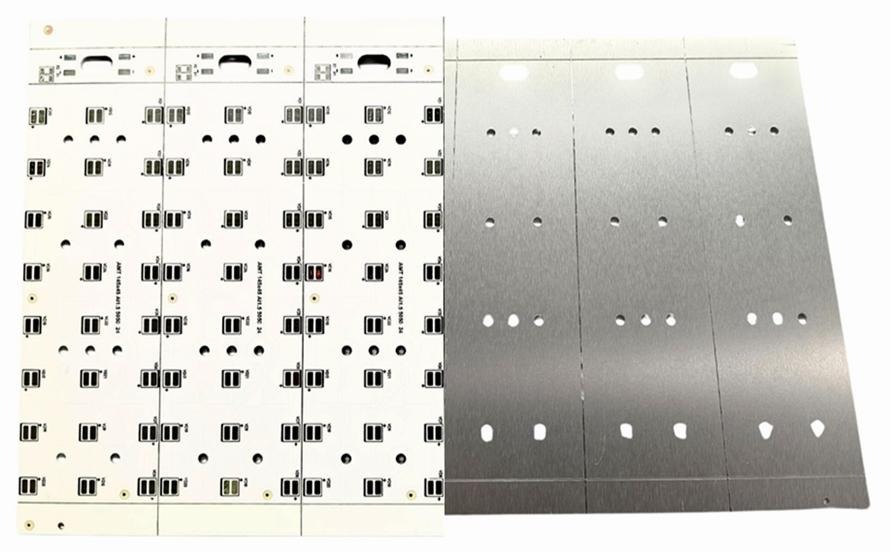
As electronic devices continue to become more compact and powerful, effective thermal management has become one of the most critical challenges in electronics design. High-power components such as LEDs, power transistors, processors, and motor controllers generate significant amounts of heat during operation. If this heat is not efficiently dissipated, it can reduce performance, shorten component lifespan, and increase the risk of system failure. This is where the Metal Core PCB has become an indispensable solution.
Unlike traditional FR4 printed circuit boards, a Metal Core PCB incorporates a metal base layer that rapidly transfers heat away from electronic components. This unique construction improves thermal conductivity while maintaining excellent electrical performance, making it ideal for applications where reliability and heat management are essential.
Industries including automotive, aerospace, LED lighting, industrial automation, renewable energy, telecommunications, and medical equipment increasingly rely on metal core circuit boards to support high-performance electronic systems. As demand continues to grow, leading Metal Core PCB Manufacturers in the World are investing in advanced fabrication technologies, innovative materials, and precision manufacturing processes to meet the evolving needs of modern electronics.
This article explores what a Metal Core PCB is, how it is manufactured, its key advantages, common applications, and why choosing an experienced manufacturing partner is crucial for producing reliable electronic products.
What Is a Metal Core PCB?
A Metal Core PCB is a printed circuit board that uses a metal substrate instead of the conventional fiberglass base found in standard PCBs. The metal core, typically made from aluminum or copper, acts as an efficient heat sink that quickly transfers thermal energy away from heat-generating electronic components.
The board structure usually consists of a copper circuit layer, an electrically insulating dielectric layer, and the metal core. The dielectric material provides electrical isolation while allowing heat to pass efficiently from the copper circuitry to the metal base.
Depending on the application’s thermal requirements, manufacturers may choose aluminum for its cost-effectiveness and excellent heat dissipation or copper for its superior thermal conductivity and mechanical strength.
Metal core PCBs are particularly suitable for high-power electronic circuits where temperature control directly affects product performance and reliability.
Why Metal Core PCBs Are Important
As electronic products become increasingly compact, more power is concentrated within smaller circuit boards. This higher power density generates significant heat that can negatively affect sensitive electronic components.
A Metal Core PCB addresses this challenge by rapidly dissipating heat through its metal substrate, helping maintain lower operating temperatures throughout the system. Lower temperatures improve electrical stability, reduce thermal stress, and extend the service life of components.
Effective thermal management also improves energy efficiency by allowing power devices to operate closer to their optimal performance levels without excessive heat buildup.
In addition to thermal benefits, metal core PCBs provide greater mechanical stability than conventional circuit boards. Their rigid construction resists warping, vibration, and thermal expansion, making them highly suitable for demanding industrial and automotive environments.
These advantages make metal core technology an increasingly important solution for modern high-power electronic applications.
The Metal Core PCB Manufacturing Process
The Metal Core PCB manufacturing process begins with selecting the appropriate metal substrate based on the application’s thermal, mechanical, and electrical requirements. Aluminum is widely used for general thermal management, while copper substrates are preferred for extremely high-power applications.
The metal substrate is cleaned and prepared before a thermally conductive dielectric layer is applied. This dielectric material provides electrical insulation while efficiently transferring heat from the copper circuitry to the metal core.
Copper foil is then laminated onto the dielectric surface. Photolithography transfers the circuit pattern onto the copper layer, followed by precision chemical etching to form the required electrical traces.
Drilling, routing, solder mask application, silkscreen printing, and surface finishing are completed using carefully controlled manufacturing processes designed for metal-based substrates.
After fabrication, each board undergoes comprehensive inspection and electrical testing to verify dimensional accuracy, circuit integrity, thermal performance, and overall manufacturing quality before shipment.
Advantages of Metal Core PCB Technology
One of the greatest advantages of a Metal Core PCB is its exceptional thermal performance. The metal substrate efficiently transfers heat away from electronic components, helping maintain lower operating temperatures even in high-power applications.
Another significant benefit is improved product reliability. Lower operating temperatures reduce thermal stress on electronic components, minimizing premature failures and extending overall system lifespan.
Metal core boards also offer excellent mechanical strength. Their rigid construction provides enhanced resistance to vibration, shock, and physical stress, making them suitable for harsh operating environments.
Electrical performance is another important advantage. Stable operating temperatures contribute to improved circuit reliability and consistent long-term performance, particularly in power electronics and LED applications.
Additionally, metal core PCBs often eliminate the need for large external heat sinks, allowing engineers to design smaller, lighter, and more compact electronic products while maintaining excellent thermal management.
Applications of Metal Core PCBs
Metal core PCBs are widely used in applications where heat dissipation is a primary design consideration. LED lighting manufacturers utilize these boards in streetlights, architectural lighting, automotive lighting, stadium illumination, industrial lighting, and commercial display systems where efficient heat removal directly affects brightness and lifespan.
Automotive manufacturers incorporate Metal Core PCB technology into electric vehicle power modules, battery management systems, motor controllers, engine control units, lighting systems, and advanced driver assistance systems operating under demanding temperature conditions.
Industrial automation companies rely on metal core boards for motor drives, power supplies, industrial controllers, welding equipment, robotics systems, and factory automation electronics that generate significant operating heat.
Renewable energy systems such as solar inverters, wind power converters, battery charging systems, and energy storage equipment also benefit from the superior thermal performance of metal core PCBs.
Medical equipment, telecommunications infrastructure, aerospace electronics, railway control systems, power conversion equipment, consumer appliances, and high-power audio amplifiers are additional examples of products that depend on reliable metal core circuit boards.
Why Metal Core PCB Manufacturers in the World Matter
Producing high-quality metal core circuit boards requires specialized engineering knowledge and advanced manufacturing capabilities. Leading Metal Core PCB Manufacturers in the World possess extensive experience in thermal management, material selection, precision fabrication, and quality assurance.
Professional manufacturers work closely with customers during product development to recommend suitable substrate materials, dielectric thicknesses, copper weights, and PCB structures based on thermal requirements and application conditions.
Modern manufacturing facilities utilize automated production equipment, precision lamination systems, CNC drilling machines, laser imaging technology, automated optical inspection, electrical testing equipment, and advanced process control systems to maintain consistent production quality.
Many global manufacturers also provide complete engineering support, including Design for Manufacturability analysis, thermal simulation, PCB fabrication, assembly services, prototype production, and supply chain management. This integrated approach helps reduce development time while improving manufacturing efficiency.
Choosing an experienced manufacturing partner ensures that products benefit from optimized thermal performance, consistent quality, and reliable long-term operation.
Quality Assurance in Metal Core PCB Manufacturing
Quality assurance plays a vital role throughout every stage of Metal Core PCB manufacturing. Incoming raw materials undergo careful inspection to verify substrate quality, dielectric properties, copper thickness, and mechanical specifications before production begins.
During fabrication, manufacturers continuously monitor lamination quality, copper adhesion, drilling accuracy, trace dimensions, solder mask application, and surface finish consistency. Automated Optical Inspection identifies manufacturing defects before boards proceed to final testing.
Electrical testing verifies circuit continuity, insulation resistance, and overall functionality. Thermal performance evaluations may also be performed to confirm that the finished boards meet specified heat dissipation requirements.
Additional reliability testing often includes thermal cycling, vibration testing, mechanical stress analysis, solderability evaluation, dimensional inspection, and environmental testing to ensure dependable long-term performance.
Leading manufacturers maintain internationally recognized certifications such as ISO 9001, IPC standards, UL certification, IATF 16949 for automotive electronics, ISO 13485 for medical devices, AS9100 for aerospace manufacturing, and RoHS compliance. These certifications demonstrate a commitment to consistent quality and reliable manufacturing for demanding electronic applications.
Conclusion
The Metal Core PCB has become an essential technology for modern electronic products that require efficient thermal management, superior mechanical strength, and long-term reliability. Its ability to rapidly dissipate heat while supporting compact, high-power designs makes it the preferred choice for industries including automotive, LED lighting, industrial automation, renewable energy, telecommunications, aerospace, and medical equipment.
Leading Metal Core PCB Manufacturers in the World continue to advance fabrication technologies through innovative materials, precision manufacturing processes, and comprehensive quality assurance systems. By partnering with experienced manufacturers, companies can develop high-performance electronic products that meet demanding thermal and reliability requirements while supporting future innovation in increasingly complex electronic systems.
