

The electronics industry is becoming increasingly competitive, requiring companies to bring products to market faster while maintaining high quality and controlling costs. Managing every stage of the manufacturing process internally can be challenging, especially when it involves sourcing components, fabricating printed circuit boards, assembling components, conducting testing, and handling logistics. To simplify these processes, many businesses choose turnkey PCB assembly as a comprehensive manufacturing solution.
Turnkey PCB assembly allows companies to outsource the entire PCB production process to a single manufacturing partner. Instead of coordinating multiple suppliers and managing complex procurement activities, customers can rely on one provider to handle everything from material sourcing to final testing. This streamlined approach improves efficiency, reduces production risks, and enables businesses to focus on product development and market growth.
As demand for advanced electronic products continues to increase across industries such as telecommunications, automotive, medical devices, aerospace, and industrial automation, turnkey manufacturing solutions have become an important part of modern electronics production.
What Is Turnkey PCB Assembly?
Turnkey PCB assembly is a manufacturing service in which a contract manufacturer manages all aspects of printed circuit board production on behalf of the customer. The manufacturer is responsible for sourcing components, fabricating the PCB, assembling electronic components, performing inspections, conducting testing procedures, and delivering finished assemblies ready for integration into final products.
The term “turnkey” refers to the idea that the customer can simply provide design files and project requirements while the manufacturing partner handles the entire production process. Once completed, the customer receives fully assembled and tested boards that are ready for immediate use.
This approach differs from consignment manufacturing, where customers supply some or all of the components themselves. In a turnkey model, the manufacturer assumes responsibility for procurement and production management, simplifying the overall manufacturing workflow.
Why Companies Choose Turnkey PCB Assembly
One of the primary reasons businesses select turnkey PCB assembly is convenience. Managing multiple suppliers for PCB fabrication, component sourcing, assembly, and testing can be time-consuming and resource-intensive. A turnkey provider consolidates these activities into a single manufacturing solution.
This centralized approach reduces administrative workload, simplifies communication, and minimizes the risk of delays caused by coordination issues between suppliers. Customers benefit from having a single point of contact throughout the project lifecycle.
Turnkey manufacturing also helps companies allocate internal resources more effectively. Instead of focusing on procurement and production management, engineering and management teams can concentrate on innovation, product development, and customer support activities.
For many organizations, these advantages translate into faster product launches and improved operational efficiency.
The Turnkey PCB Assembly Process
The turnkey PCB assembly process begins when the customer submits manufacturing documentation. This typically includes Gerber files, bills of materials, assembly drawings, test requirements, and other engineering data necessary for production.
The manufacturing partner reviews the design to identify potential manufacturability concerns and verify component availability. Once the project is approved, component procurement activities begin. Manufacturers leverage their supplier networks to source components from authorized distributors and reliable vendors.
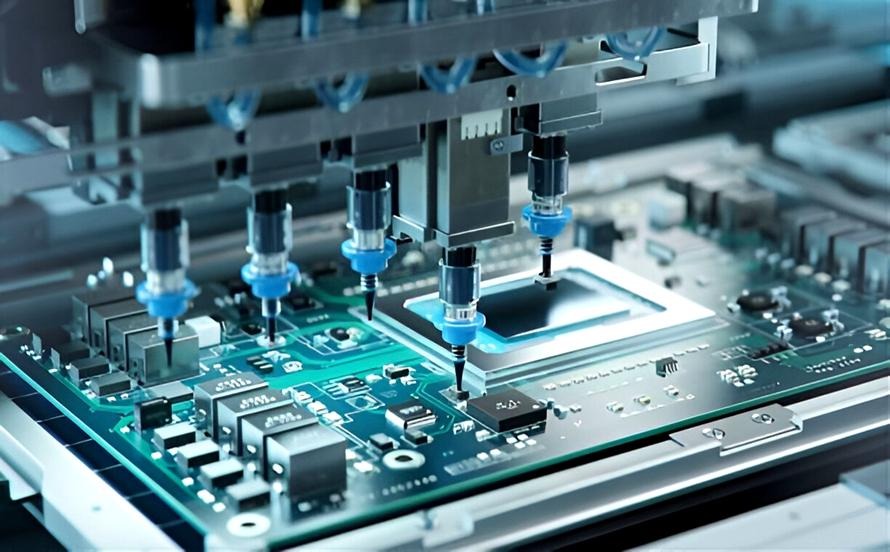
After components are secured, PCB fabrication is completed according to design specifications. The boards then move to the assembly stage, where automated equipment places components and soldering processes create electrical connections.
Following assembly, inspection and testing procedures verify quality and functionality. Finished assemblies are packaged and prepared for shipment to the customer.
This end-to-end process provides a seamless manufacturing experience while ensuring product quality and consistency.
Component Sourcing Advantages
Component procurement is often one of the most challenging aspects of electronics manufacturing. Global supply chain disruptions, extended lead times, counterfeit components, and inventory shortages can create significant production challenges.
Turnkey PCB assembly providers typically maintain strong relationships with authorized suppliers and distributors. These relationships enable manufacturers to secure components more efficiently and often at competitive pricing levels.
Professional procurement teams monitor component availability, manage sourcing risks, and identify suitable alternatives when necessary. Their expertise helps prevent delays and supports reliable production schedules.
By outsourcing procurement responsibilities, customers can reduce supply chain complexity while improving component traceability and quality assurance.
Cost Benefits of Turnkey PCB Assembly
Many companies assume that outsourcing a complete manufacturing process may increase costs. However, turnkey PCB assembly often provides substantial financial advantages.
Manufacturers benefit from purchasing components in larger volumes, allowing them to negotiate favorable pricing with suppliers. These cost efficiencies can frequently be passed on to customers.
In addition, consolidating procurement, fabrication, assembly, and testing under a single provider reduces administrative expenses and simplifies project management. Fewer suppliers mean fewer purchase orders, less coordination, and lower overhead costs.
Turnkey manufacturing also reduces the risk of production delays and inventory issues, which can contribute to overall cost savings throughout the product lifecycle.
Quality Control in Turnkey PCB Assembly
Quality assurance is a critical element of turnkey PCB assembly because the manufacturing partner assumes responsibility for the complete production process. Reputable manufacturers implement rigorous quality control systems at every stage of production.
Incoming materials are inspected to verify authenticity and compliance with specifications. During assembly, Automated Optical Inspection systems evaluate component placement, polarity, and solder joint quality.
For advanced assemblies, X-ray inspection may be used to examine hidden solder connections beneath semiconductor packages such as Ball Grid Arrays. Electrical testing procedures including In-Circuit Testing and functional testing further verify assembly performance.
Comprehensive quality management ensures that finished products meet customer requirements and industry standards.
Turnkey PCB Assembly for Prototype and Production Runs
Turnkey PCB assembly is suitable for both prototype development and large-scale production. During the prototype stage, manufacturers can help identify design issues, validate functionality, and support rapid product development.
Prototype projects benefit from reduced procurement complexity because the manufacturer manages component sourcing and production logistics. This allows engineering teams to focus on design refinement and testing.
As products transition into volume production, turnkey manufacturing provides scalability and consistency. Manufacturers can efficiently increase production capacity while maintaining established quality standards.
This flexibility makes turnkey assembly an attractive solution for startups, growing businesses, and established companies alike.
Industries That Use Turnkey PCB Assembly
Turnkey PCB assembly supports a wide range of industries that require reliable electronics manufacturing solutions. Medical device manufacturers use turnkey services to produce diagnostic equipment, monitoring systems, and healthcare technologies.
Automotive companies rely on turnkey manufacturing for control systems, sensors, and advanced vehicle electronics. Telecommunications providers use assembled PCBs in networking equipment and communication infrastructure.
Industrial automation systems, aerospace electronics, consumer devices, renewable energy products, and Internet of Things applications also benefit from turnkey production solutions.
The ability to manage complex manufacturing requirements under a single provider makes turnkey assembly valuable across numerous market sectors.
Challenges and Considerations
While turnkey PCB assembly offers many benefits, selecting the right manufacturing partner is essential. Customers should evaluate a provider’s technical capabilities, quality certifications, supply chain expertise, and production capacity before making a decision.
Clear communication is also important. Accurate bills of materials, complete design documentation, and well-defined project requirements help ensure successful production outcomes.
Companies should verify that their manufacturing partner maintains strong quality control procedures and follows industry standards relevant to their products. Regular communication throughout the project helps address potential issues before they affect production schedules.
Choosing an experienced provider significantly increases the likelihood of a successful manufacturing partnership.
The Future of Turnkey PCB Assembly
Advances in automation, artificial intelligence, and digital manufacturing technologies are shaping the future of turnkey PCB assembly. Smart factories equipped with real-time monitoring systems are improving production efficiency and quality consistency.
Manufacturers are also expanding service offerings to include engineering support, supply chain management, product testing, and complete box build assembly solutions. These capabilities allow customers to consolidate even more aspects of product manufacturing under a single provider.
As electronic products continue to become more sophisticated, turnkey manufacturing will play an increasingly important role in supporting efficient and scalable production.
Conclusion
Turnkey PCB assembly provides a comprehensive solution for companies seeking efficient, cost-effective, and high-quality electronics manufacturing. By combining component sourcing, PCB fabrication, assembly, inspection, testing, and logistics management into a single service, turnkey manufacturing simplifies production while reducing administrative burdens and supply chain risks. Businesses benefit from faster development cycles, improved quality control, scalable production capabilities, and access to experienced manufacturing expertise. As the electronics industry continues to evolve, partnering with a trusted turnkey PCB assembly service provider can help organizations accelerate product launches, optimize manufacturing operations, and achieve long-term success in competitive global markets.