

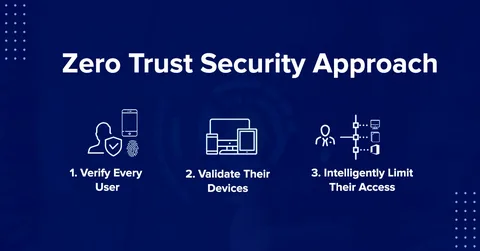
With the failure of the perimeter security approach in answering today’s needs, Zero Trust has become the go-to model for secure digital infrastructure. At its core, ZTNA differs from traditional VPNs in terms of assigning strict, acceptable and context-aware access.
The ZTNA can only be as good as the IAM system; there is no way for ZTNA to work without IAM. Zero Trust interests start with Identity.
What is ZTNA?
Zero Trust Network Access (ZTNA) is a cybersecurity framework that permits a user on their end to access applications only when an identity, device, and purpose are confirmed for that user, it never assumes an inherent trust relationship only based on network presence, it’s context aware and policy-driven access reduces the attack surface.
IAM: The Brains Behind Access Decisions
Identity Governance and Administration (IGA) is about identities and goes way beyond usernames and passwords. It considers authentication (proof of claiming a specific identity), authorisation (permission to perform certain operations), role or attribute-based access control, identity federation, and other concepts. In the case of Zero Trust, the identity has become the new perimeter. This means that your access rights are not given based on the place from where you are accessing, or your IP address; rather, your identity needs to be verified. ZTNA and IAM together form the duo to verify that identity and enforce access rights following the policy.
For instance, if an employee working remotely wants to connect to the cloud-hosted HR portal. This is what ZTNA would consider:
- Who is this user? (IAM authentication)
- Is this a trusted device?
- Is this environment secure?
- Does the user have the right to access this app?
IAM handles the first and most critical part: verifying the user and controlling access to resources. Without this, it gets difficult for ZTNA to function.
Why IAM is Central
- User-centric security: IAM shifts the focus onto users rather than networks or devices. ZTNA engenders this user-first perspective to reduce lateral movement and insider threats.
- Policy enforcement: IAM allows you to define access rights based on roles, attributes, and context. These policies form the core of ZTNA determination.
- Audit and compliance: The system keeps track of what users are up to, which helps detect anomalies and meet regulatory requirements. ZTNA uses these logs to take threat detection even further.
- Scaling and flexibility: IAM affords seamless access to applications wherever they might reside, on-premises, in clouds, or SaaS, as the workforce becomes hybrid and distributed. ZTNA relies on IAM to scale securely along with the business.
Conclusion
Zero Trust is the new way of thinking about networking. ZTNA is the application of the Zero Trust theory into practice. One cannot think of ZTNA without having strong identity management at its back. IAM means that a person shall be permitted access, under the right circumstances, at the right time, and for the right reasons.
When discussing Zero Trust, don’t think of just tools and firewalls. Begin with your identity layer. Trust must be earned in Zero Trust, and that can only be done by IAM.
