

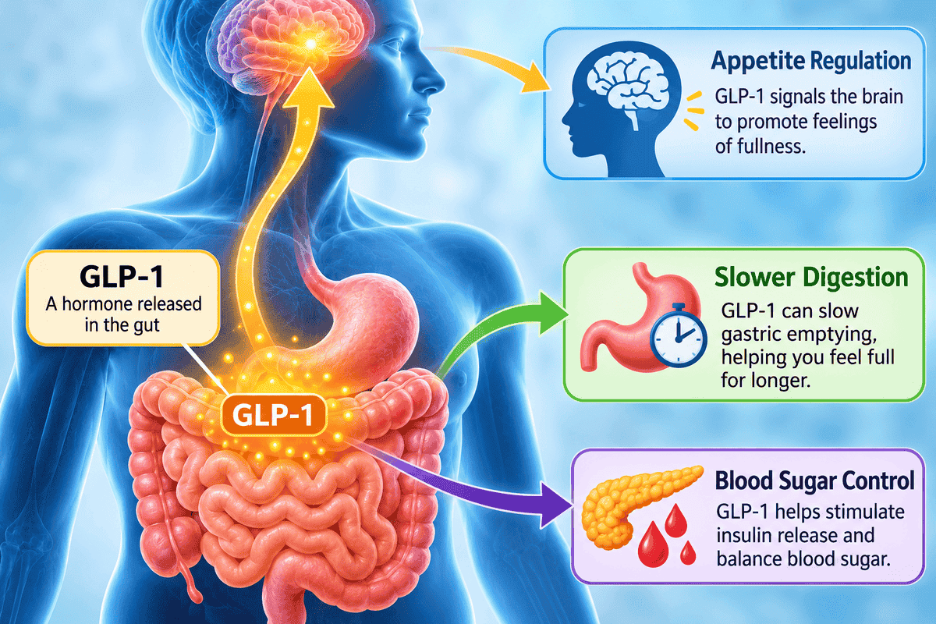
The human body relies on a complex network of hormones to regulate hunger, digestion, blood sugar, and energy balance. Among these hormones, glucagon-like peptide-1 (GLP-1) has attracted considerable attention because of its role in controlling appetite and influencing metabolic processes. Although GLP-1 is naturally produced in the body, its biological functions have also become an important area of scientific research.
Understanding how GLP-1 works provides valuable insight into the relationship between the digestive system, the brain, and metabolic health. From regulating insulin secretion to influencing feelings of fullness after meals, this hormone participates in several processes that help the body respond to food.
What Is GLP-1?
Glucagon-like peptide-1, commonly abbreviated as GLP-1, is a hormone produced primarily by specialized cells in the intestinal lining. These cells, known as enteroendocrine L-cells, release GLP-1 in response to nutrients entering the digestive system.
GLP-1 belongs to a group of hormones called incretins. Incretin hormones help regulate blood glucose levels by communicating with the pancreas after food is consumed. Their activity is particularly important during digestion, when the body must process nutrients and maintain stable glucose levels.
GLP-1 is released following the consumption of carbohydrates, fats, and proteins. Its secretion is part of the body’s natural response to eating, helping coordinate digestive activity with metabolic requirements.
Although GLP-1 remains active for a relatively short period under normal physiological conditions, its effects involve several organs and biological systems. Researchers continue to investigate how these interactions influence appetite, glucose regulation, and overall energy balance.
How GLP-1 Influences Appetite
One of the most widely studied functions of GLP-1 is its effect on appetite regulation. Hunger and fullness are not controlled by the stomach alone. The brain receives signals from hormones, nerves, and other physiological processes that help determine when a person feels hungry or satisfied.
GLP-1 contributes to this communication network by interacting with receptors involved in appetite regulation. These receptors are present in several areas associated with feeding behavior, including parts of the brain and nervous system.
Following a meal, GLP-1 signaling can help promote feelings of fullness and reduce the desire to continue eating. This response is part of the body’s natural mechanism for recognizing that sufficient nutrients have been consumed.
The hormone also communicates with the nervous system through pathways connecting the digestive tract and brain. These signals help the brain interpret information about food intake and digestive activity.
Appetite regulation is influenced by numerous factors, including other hormones, food composition, sleep, stress, and individual metabolic characteristics. GLP-1 is one component of this larger system rather than the sole determinant of hunger or eating behavior.
The Relationship Between GLP-1 and Digestion
GLP-1 also affects how food moves through the digestive system. One of its physiological effects is slowing gastric emptying, the process through which food leaves the stomach and enters the small intestine.
When gastric emptying slows, nutrients may enter the small intestine more gradually. This can influence how quickly glucose appears in the bloodstream following a meal and contribute to the sensation of fullness.
The digestive system uses this mechanism to coordinate nutrient processing with other metabolic responses. However, gastric emptying is affected by multiple variables, including the size and composition of a meal, digestive health, and hormonal signaling.
GLP-1’s influence on gastrointestinal activity illustrates how closely appetite and digestion are connected. Signals generated within the digestive tract can influence both physical sensations and the brain’s response to food.
GLP-1 and Blood Sugar Regulation
Another important function of GLP-1 is its role in glucose metabolism. When blood glucose levels rise after eating, GLP-1 helps stimulate insulin secretion from pancreatic beta cells.
Insulin is responsible for helping glucose move from the bloodstream into cells, where it can be used for energy or stored for later use. By supporting insulin release in response to elevated glucose, GLP-1 contributes to the body’s ability to manage blood sugar after meals.
GLP-1 also influences glucagon, a hormone produced by pancreatic alpha cells. Glucagon helps increase blood glucose when levels become too low. GLP-1 can reduce glucagon secretion when glucose levels are elevated, helping balance the body’s metabolic response to food.
These actions are considered glucose-dependent, meaning their effects are closely associated with the body’s existing glucose levels. This distinction is an important part of GLP-1’s biological role.
The hormone’s effects on insulin and glucagon demonstrate why researchers study it in relation to metabolic conditions, including type 2 diabetes.
GLP-1 and Energy Balance
Energy balance refers to the relationship between the energy consumed through food and the energy used by the body. This process involves several systems, including the brain, digestive tract, endocrine system, muscles, and adipose tissue.
GLP-1 participates in energy balance primarily through its effects on food intake, appetite signaling, and digestion. By influencing feelings of fullness and the rate at which food leaves the stomach, it may affect the amount of food consumed during and between meals.
However, body weight regulation is considerably more complicated than a single hormonal pathway. Genetics, environmental influences, physical activity, sleep patterns, dietary habits, and other metabolic signals all contribute to changes in body weight over time.
Scientific interest in GLP-1 has increased partly because researchers are examining how its natural functions differ from the effects of compounds designed to activate GLP-1 receptors for extended periods.
Natural GLP-1 and GLP-1 Receptor Research
Naturally occurring GLP-1 is rapidly broken down by enzymes in the body. As a result, its biological activity is relatively short-lived. Scientists have investigated how GLP-1 receptor activation can be studied and maintained for longer periods through different molecular approaches.
This research has contributed to the development of GLP-1 receptor agonists, a class of medications designed to mimic certain actions of the naturally occurring hormone. These medications are used in specific medical settings under professional supervision.
The distinction between the natural hormone and synthetic compounds is important. Research materials, experimental compounds, and approved medications may differ in formulation, purity, biological activity, and intended use.
Researchers investigating peptide biology may encounter suppliers and educational resources discussing USA Peptide Depot GLP weight loss products in the context of peptide-related research. Nevertheless, product descriptions or research listings should not be interpreted as evidence of clinical effectiveness, safety, or suitability for human consumption. Understanding the underlying biology and evaluating scientific evidence remain essential when exploring this field.
Why GLP-1 Research Continues to Expand
GLP-1 represents an important example of how scientists investigate the connection between hormones, the digestive system, and metabolic regulation. Its effects extend beyond insulin secretion, highlighting the complex communication that takes place between the gut and the brain.
Researchers continue to study the pathways involved in appetite regulation, glucose metabolism, gastric emptying, and energy balance. Advances in molecular biology, endocrinology, and biotechnology are helping scientists better understand these processes and identify additional questions for investigation.
As knowledge of GLP-1 develops, the hormone provides an increasingly valuable framework for studying how the body responds to food and maintains metabolic balance.
Conclusion
GLP-1 is a naturally occurring hormone that plays several roles in the body’s response to food. It helps regulate insulin secretion, influences glucagon activity, affects gastric emptying, and participates in appetite signaling between the digestive system and brain.
These interconnected functions make GLP-1 an important subject in endocrinology and metabolic research. Understanding its biological mechanisms provides a foundation for exploring broader questions about digestion, energy balance, and the complex processes that influence human metabolism.