

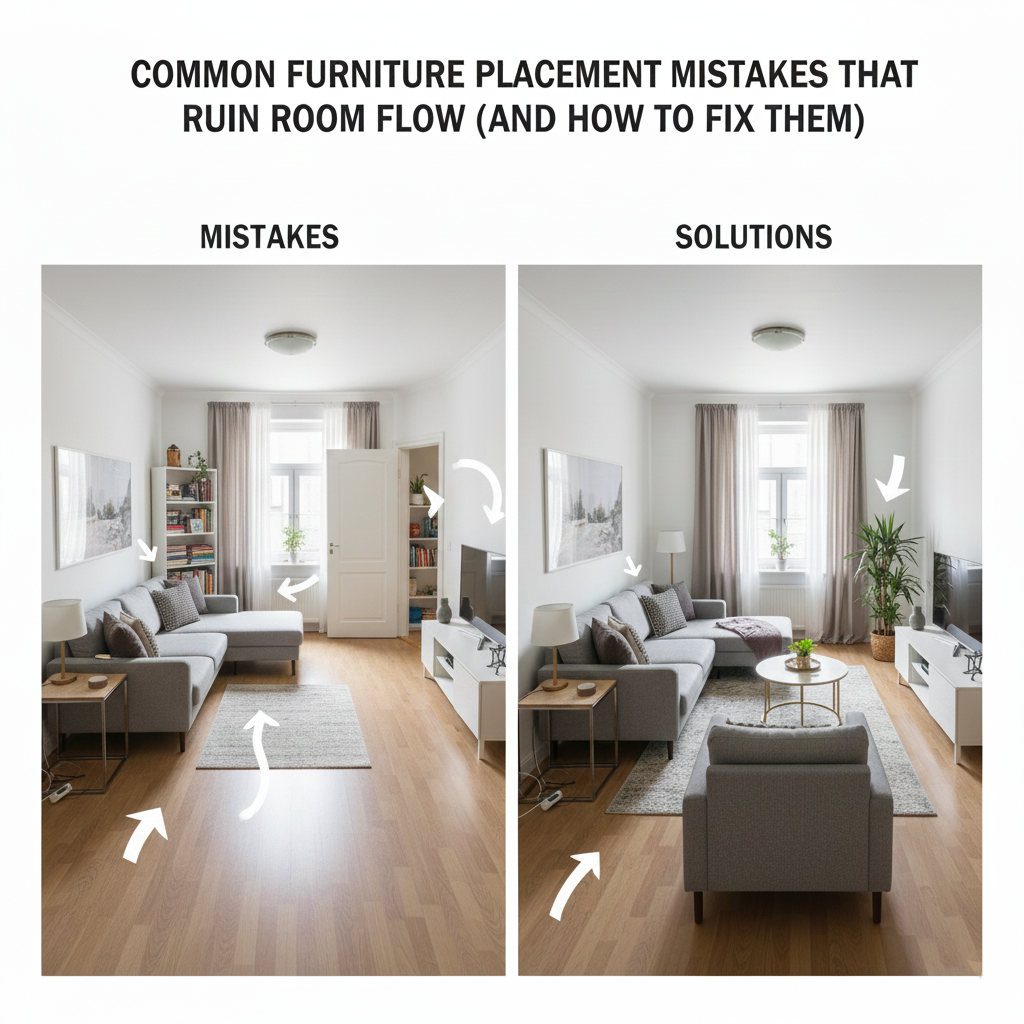
Most of us don’t buy wrong furniture. We place it wrong. That’s the real problem. You buy a good sofa, a decent table, a nice cabinet, everything looks fine individually. But the room still feels awkward. Walking feels tight. Conversations feel forced. Something just feels off, you know what’s that? That something is usually furniture placement.
In Indian homes especially, rooms are expected to do many jobs. Living room is for TV, guests, kids studying, sometimes even office calls. One wrong placement and the entire flow breaks. Let’s talk about the most common mistakes we all make and more importantly how to fix them without changing all the furniture.
Pushing All Furniture Against the Walls
This is the most common one. Almost default setting in Indian homes.
Sofa against the wall. Chairs against the wall. Tables pushed to corners. Everything standing like it’s afraid of the centre of the room. The idea behind this is simple. We think pushing furniture to walls will make the room look bigger. But most of the time, it does the opposite.
When furniture hugs the walls, the room feels disconnected. Conversations feel stretched. Everyone is sitting far apart like they’re in different zones.
How to fix this
• Pull the sofa slightly inward, even 6 to 12 inches makes a difference
• Create a small seating group instead of spreading furniture around
• Let the center table anchor the space
Once you do this, the room starts feeling more social, more balanced, more natural. This is something you’ll notice instantly in well planned living rooms at Wooden Street showrooms where furniture is placed for real living, not just display.
Blocking Natural Pathways and Doorways
This one slowly drives people mad but they don’t always realise why. You keep bumping into the corner of the table. You have to twist sideways to pass. Door opens and hits a chair. All of this kills room flow.
Every room has natural movement paths. From door to sofa. From sofa to balcony. From dining to kitchen. When furniture blocks these paths, the room starts feeling stressful.
How to fix this
• First walk through the room without moving anything
• Notice where you naturally walk and turn
• Rearrange furniture to keep these paths clear
Comfort is not just about soft cushions. It’s about moving freely without thinking twice. Once pathways are clear, the room suddenly feels bigger even if nothing new is added.
Ignoring Proper Scale and Proportion
This mistake usually happens during buying, but its impact shows during placement.
Big sofa in a small room. Tiny rug under a massive seating setup. Oversized cabinet in a narrow wall. Everything feels either too heavy or too lost. When furniture size does not match room size, flow automatically suffers.
How to fix this
• Choose furniture that matches the room’s width and length
• Balance heavy pieces with lighter ones
• Avoid filling every wall with bulky items
A large sofa can work in a small room if the rest of the furniture stays light. Raised legs, open shelves, a slim coffee table, and slimmer tables all help balance things out
Placing Furniture Without a Clear Focal Point
Many rooms feel random because furniture is placed without any clear direction.
Sofa facing nowhere. Chairs looking confused. TV unit placed but not really acknowledged by the seating. Every room needs one main focus point. Something that naturally draws attention.
Common focal points are
• TV unit
• Window with a view
• Balcony door
• A feature wall or artwork
How to fix this
• Identify the main focal point first
• Arrange seating to face or support it
• Let other furniture play a supporting role
When furniture respects a focal point, the room instantly feels more organised and intentional instead of random.
Overcrowding the Room with Too Many Pieces
This happens when we try to fit everything we like into one room, like:
“Extra chair just in case. Another side table because it looked nice. Stool for guests who may or may not come.”
Before you know it, the room feels tight and heavy. Flow needs breathing space. Empty space is not wasted space.
How to fix this
• List what you actually use daily
• Remove pieces that serve no real purpose
• Replace bulky items with slimmer options
Negative space is what allows furniture to stand out. A slightly empty corner often makes the whole room feel calmer and easier to live in.
Overlooking Lighting and Sightlines
Furniture placement is not just about where things sit. It’s also about what you see and how light moves.
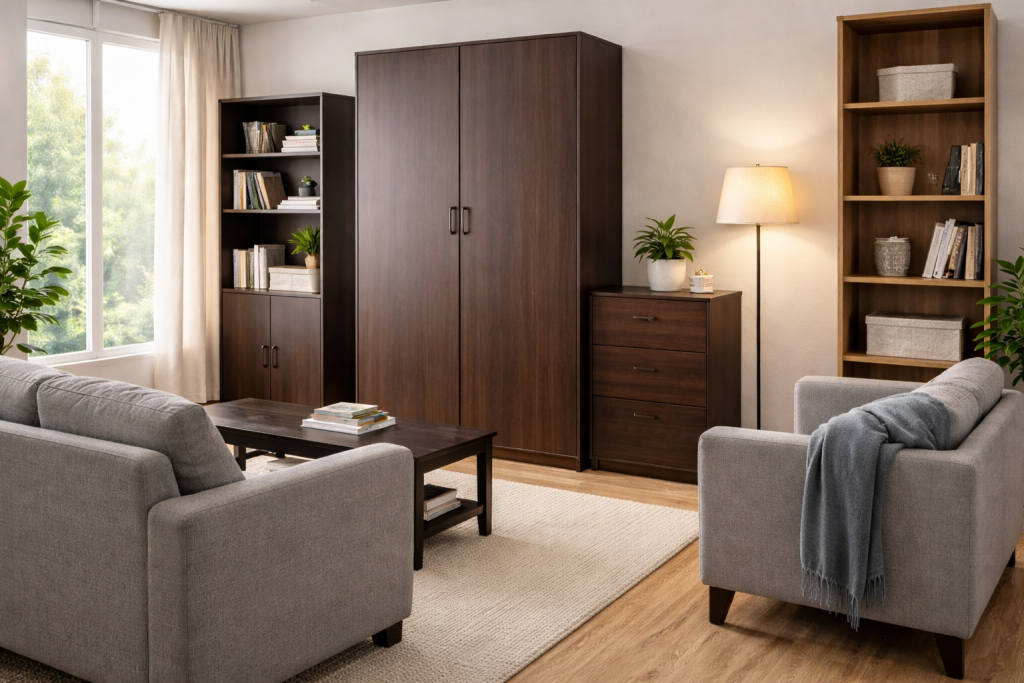
Tall furniture blocking windows. Lamps placed randomly. Sightlines cut by high cabinets. When you can’t see across the room clearly, the space feels smaller and more closed.
How to fix this
• Keep windows and light sources unobstructed
• Use lamps to guide movement and seating areas
• Avoid placing tall pieces in the line of sight
Good lighting supports furniture placement. It guides the eye and helps the room feel open and connected. This balance is often well demonstrated in room setups at Wooden Street where lighting and furniture placement work together instead of fighting each other.
Conclusion
Room flow is not about following design rules. It’s about how the room feels when you live in it every day. If walking feels awkward, if conversations feel forced, if the room feels cluttered even after cleaning, chances are furniture placement is the issue.
The good part is you don’t need new furniture to fix this. Small shifts make big differences. Pulling furniture inward. Clearing pathways. Respecting scale. Choosing fewer pieces.When furniture is placed thoughtfully, rooms feel calmer, movement feels easier, and the house starts working for you instead of against you. And that’s when a space truly feels like home.